
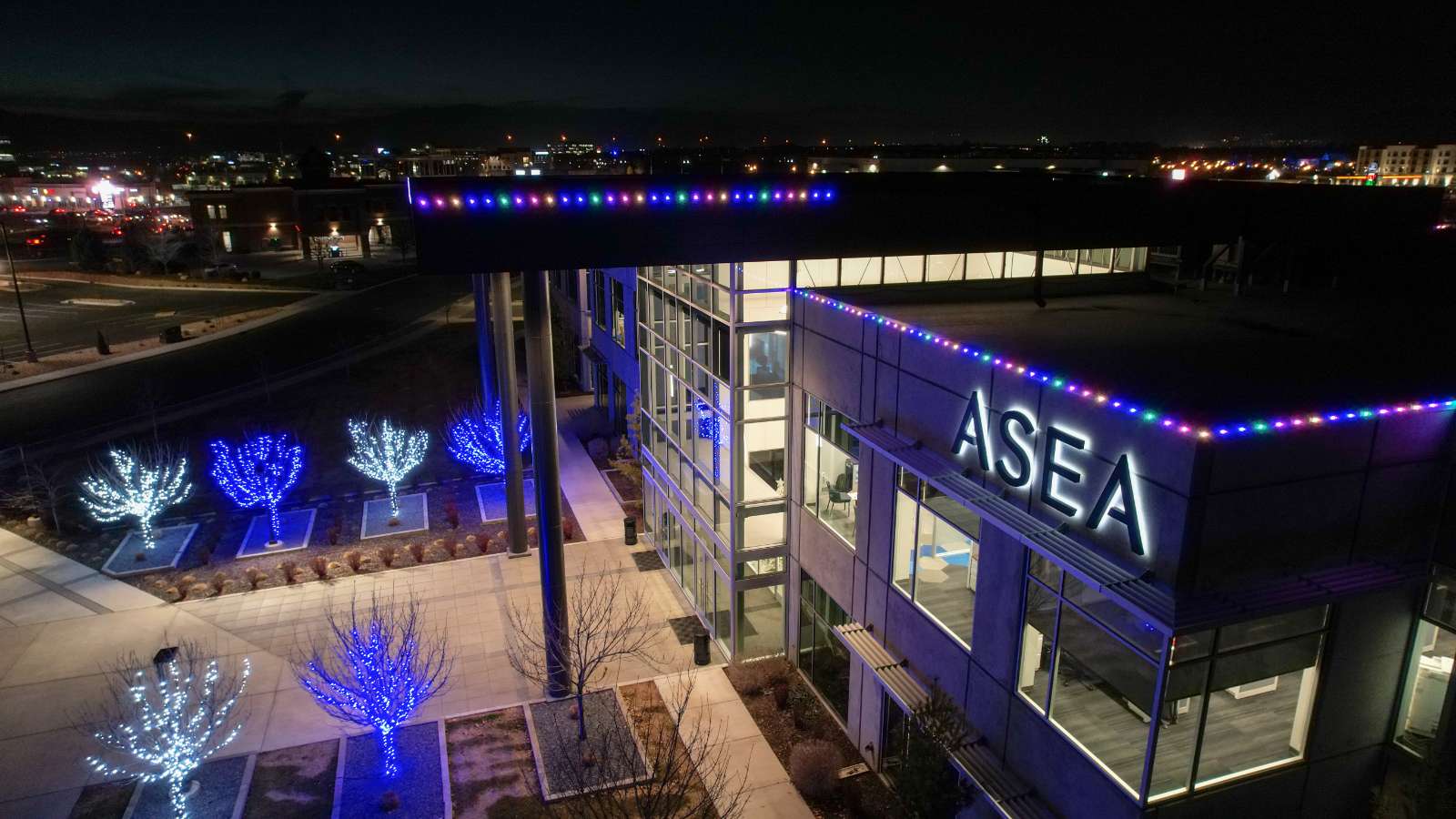
A storefront can look polished all day and disappear the moment the sun goes down. This commercial building lighting guide is built for property owners who want their business, venue, office, or mixed-use property to stay visible, welcoming, and ready to celebrate without sending someone up a ladder before every holiday.
Permanent exterior lighting changes the equation. Rather than treating lighting as a once-a-year decoration or a basic security expense, it gives a commercial property a programmable feature that can support branding, events, tenant visibility, and curb appeal every night of the year.
Start With What the Building Needs to Do After Dark
The best lighting plan begins with purpose, not a color palette. A restaurant may need a warm, inviting exterior that makes guests feel expected. A retail center may need clear illumination at entrances and a flexible way to promote seasonal events. A sports facility, dealership, or community venue may want bold colors for game days, fundraisers, and local celebrations.
Security is part of the conversation too. Lighted entries, walkways, and building edges make a property easier to navigate and less likely to feel vacant after business hours. That does not mean every surface needs to be flooded with bright white light. Overlighting can create glare, wash out architectural details, and make neighboring properties uncomfortable. The goal is a well-defined building that feels active and cared for.
For many commercial properties, the strongest approach combines practical area lighting with permanent accent lighting. Functional fixtures handle parking areas, paths, stairs, and work zones. Programmable RGBW lighting highlights rooflines, trim, awnings, and façades where it can create a cleaner visual signature.
Choose Lighting for the Architecture, Not Just the Occasion
A permanent system should look intentional in daylight and impressive at night. Before selecting products, walk the property from the street, the parking lot, and the main customer approach. Look for the lines that already make the building recognizable: roof peaks, parapets, covered entries, columns, canopies, or distinctive trim.
Discreet mounting matters. When lights are tucked under soffits, flashing, or trim, the system does not compete with the architecture during business hours. At night, it can outline the building with a consistent, professional effect rather than the uneven look of temporary strands.
Consider the scale of the building as well. A small boutique can look dramatic with a simple warm-white roofline and a few programmed holiday scenes. A larger office complex may need separate zones for each elevation, entrance, or tenant-facing area. Zoning lets you keep the front entry welcoming, illuminate a side access point for security, and reserve bolder effects for special dates without turning the entire property into a light show.
 Warm White Is the Everyday Workhorse
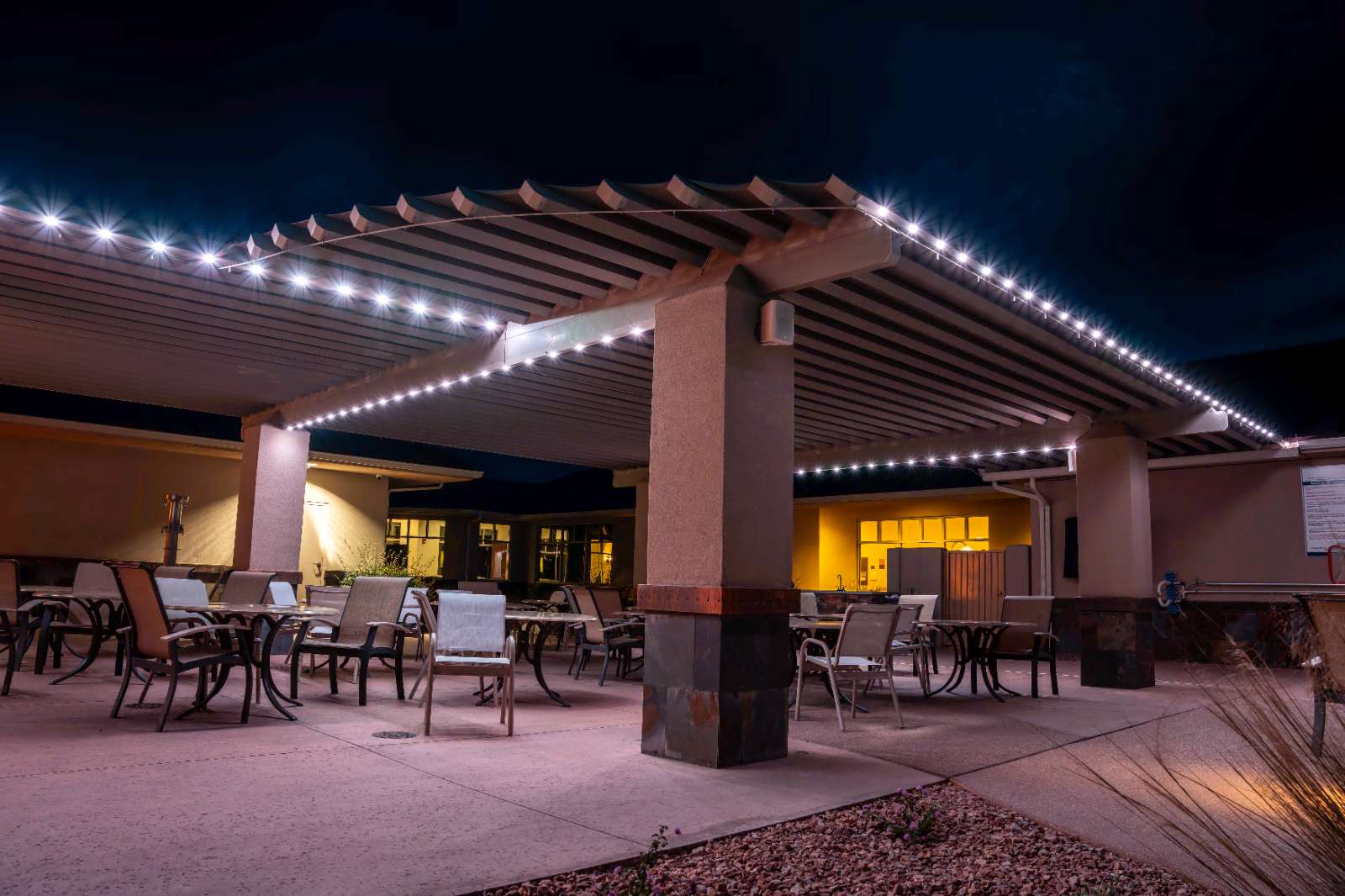
Color gets attention, but warm white often delivers the most value over the course of a year. It complements brick, stone, siding, stucco, and metal finishes while making the property look polished for ordinary evenings, open houses, dinners, and client events.
This is why true RGBW lighting matters. Systems that create white by mixing red, green, and blue can produce a cooler or less natural result. A dedicated warm-white channel gives a commercial property a refined daily setting, while still making vivid colors available when the calendar calls for them.
Brightness Should Match Viewing Distance
More lumens are not automatically better. The right output depends on mounting height, building color, ambient streetlight, viewing distance, and the effect you want. A roofline viewed from a busy road needs enough presence to read clearly, while a narrow walkway needs controlled light that helps people see without shining into their eyes.
Ask whether the lighting is meant to be seen from 30 feet away, across a parking lot, or from passing traffic. Then test a small section if possible. This avoids a common mistake: buying a system that looks great in a product photo but feels too dim, too intense, or too tightly spaced on the actual building.
Build a System That Is Easy to Run
Commercial lighting loses value quickly if it requires constant manual adjustment. The property manager should not need to remember every holiday, arrive early to switch scenes, or rely on an employee who happens to know the app.
Scheduling is where permanent smart lighting earns its keep. Set warm white for normal business evenings, choose brand colors for a planned promotion, and schedule holiday scenes ahead of time. A system with app-based control also makes quick changes practical when a local team wins, a tenant hosts an event, or weather shifts operating hours.
For larger properties, establish a simple operating plan before installation. Decide who has access, which scenes are approved for regular use, and when brighter or animated patterns are appropriate. A little governance keeps lighting on-brand and prevents the exterior from becoming visually noisy.
There is a trade-off here. Animated effects can create energy for grand openings and seasonal events, but constant motion may distract drivers or feel out of place at a medical office, professional building, or upscale retail center. Use movement as an event tool. Use warm white and restrained color scenes as the everyday standard.
Plan for Weather, Service, and Long-Term Value
Temporary lighting creates a predictable annual chore: find the boxes, test the strands, replace failed bulbs, schedule labor, climb ladders, and take everything down again. A permanent commercial system is a different kind of investment. The upfront cost can be higher, but the property gains a feature it can use across holidays, promotions, security routines, and normal evening operations.
Durability should be central to the decision. Exterior components need to handle heat, cold, rain, wind, and ongoing exposure. Look for weather-resistant construction, professional-grade connections, a clear warranty, and a realistic lifespan. Systems rated for up to 50,000 hours can provide years of use, but installation quality and local conditions still matter.
A clean power and controller plan is equally important. Identify where controllers will be placed, how power will reach each run, and which areas need independent control. Long building lines, multiple elevations, and separate tenant zones can affect the design. This is where a professional consultation can prevent unsightly routing, overloaded runs, or a setup that is difficult to expand later.
If your team is capable and the project is straightforward, a DIY-configurable system can offer meaningful savings. For complex rooflines, multistory buildings, hard-to-reach trim, or properties where downtime matters, professional installation may be the smarter choice. The right path depends on the building, not just the budget.
Use Color With a Business Purpose
Commercial exterior lighting works hardest when it gives people a reason to notice the property. Brand colors can reinforce recognition without requiring a new banner or window display. Seasonal scenes create a festive look that encourages photos and makes a destination feel more active. Community colors can show support during school events, charitable campaigns, and hometown celebrations.
Keep the palette disciplined. Two or three brand-aligned colors usually create a stronger result than a different combination on every building surface. For holidays, use recognizable color pairings and let the architecture provide the structure. The lights should enhance the property, not hide it.
It also helps to create a scene library for the year. Build settings for everyday warm white, key holidays, tenant events, special promotions, and local teams. With more than four billion color options and hundreds of preset patterns available in systems like EverLights, the challenge is rarely finding an option. It is choosing a few that look great, serve the business, and can be deployed in seconds.
Avoid the Lighting Mistakes That Cost More Later
The biggest mistakes are usually planning mistakes. Installing without considering sightlines can leave the most visible side of the building underlit. Skipping zones can force the whole property into one setting. Choosing a system based only on holiday use can result in lighting that lacks a credible warm-white setting for the other eleven months.
Another misstep is ignoring local requirements. Check municipal rules, landlord standards, signage restrictions, and any guidelines for historic districts or homeowner associations before committing to a design. Commercial tenants may also have rules about brand colors, operating hours, and exterior modifications.
Finally, do not treat installation as the finish line. Once the system is live, stand across the street after dark, drive through the lot, and view the building from the customer entrance. Adjust brightness, timing, and color temperature until the property looks as good in real life as it did on the plan.
Start with one question: what should people feel when they see your building at night? A thoughtful permanent lighting plan can make the answer clear, whether it is welcome, celebration, confidence, or simply a business that looks open and ready.