
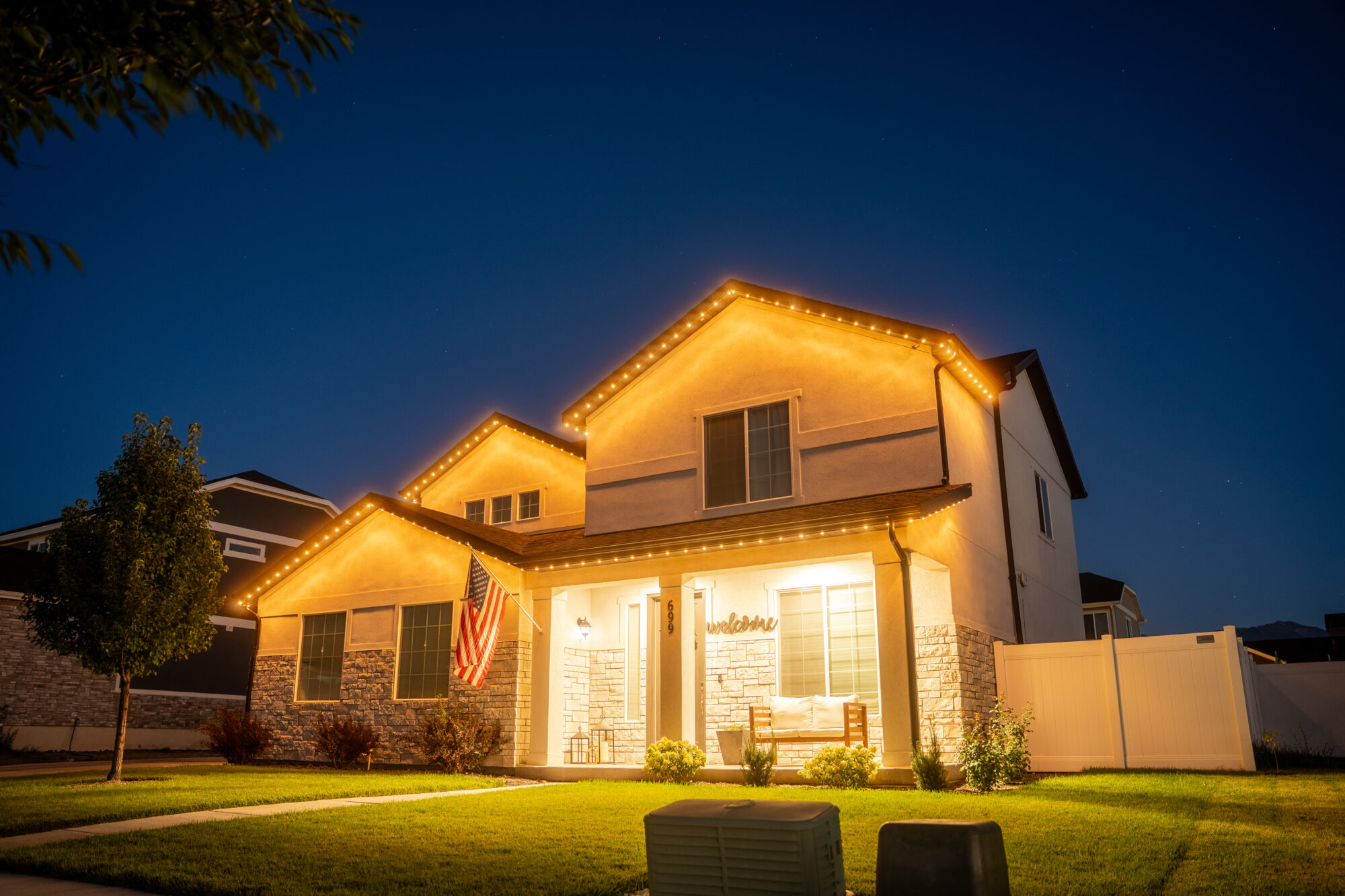
A clean roofline in December used to mean one thing: someone had just spent a cold afternoon on a ladder, untangling strands and chasing dead bulbs. Hidden soffit Christmas lights change that routine completely. The fixtures stay tucked beneath your eaves during the day, then bring your home to life with crisp warm white, holiday colors, and animated patterns after sunset.
The appeal is not simply that the lights look better. It is that your home is ready when the calendar changes. No clips on the gutters. No bins of tangled strands in the garage. No last-minute scramble before guests arrive. Just open the app, select a scene, set a schedule, and enjoy the season.
What Makes Hidden Soffit Christmas Lights Look Better?
Traditional string lights are meant to be seen. The wire, clips, and bulbs sit along the gutterline, which can create visual clutter even before a single light turns on. Permanent lights designed for soffit installation take the opposite approach. Their channels and LEDs are installed beneath the soffit, trim, or flashing so they blend into the home’s architecture.
That concealed placement matters most in daylight. Your home keeps its clean lines in March, July, and November instead of looking like holiday decorations were left behind. At night, the lights cast downward and outward to define the roofline, create a polished glow, and make the lighting feel intentional rather than temporary.
Placement also affects the final look. Fixtures mounted too far back under a deep soffit may create a softer wash of light. Mounting closer to the outer edge usually produces a more defined pattern along the fascia. The right choice depends on your roofline, siding color, soffit depth, and whether you want a subtle architectural effect or a bold holiday display.
 Permanent Lighting Solves the Seasonal Problem
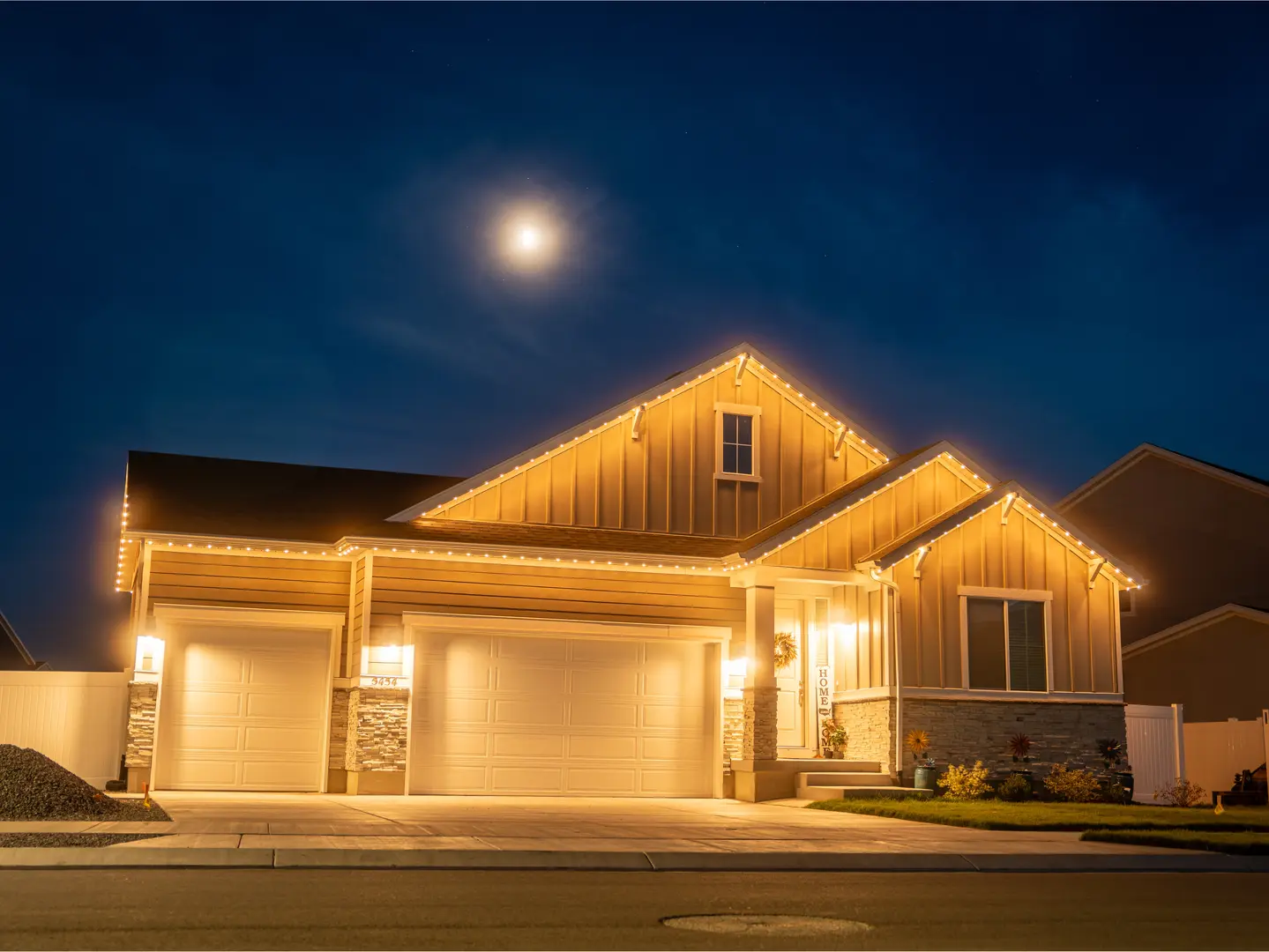
Hanging Christmas lights is rarely a one-time task. It is a yearly cycle of installation, maintenance, removal, storage, and replacement. Weather can crack clips, water can damage connections, and one failed section can turn a weekend project into a troubleshooting session.
A permanent RGBW lighting system is built to remain in place. Quality outdoor components are weather-resistant and designed for long service life, which makes the upfront investment different from a few boxes of seasonal lights. You are not buying one holiday display. You are adding a programmable exterior feature that works for Christmas, Halloween, game day, birthdays, backyard gatherings, and everyday curb appeal.
The RGBW detail is worth understanding. RGB lights create colors by blending red, green, and blue. Adding a dedicated white LED gives you a cleaner, more natural warm-white setting for the nights when you want your home to look elegant rather than festive. That distinction is especially valuable after the holidays, when bright red and green may not fit the mood but a warm roofline glow still does.
Control Should Be Simple, Not Another Weekend Project
The best hidden lighting systems make customization feel easy. Through an app, homeowners can select colors, use preset patterns, adjust brightness, and create schedules without stepping outside. Want warm white every evening at 7 p.m., red and green for Christmas week, and your team colors on Sunday? Set it once and let the schedule handle the rest.
That control also gives the system practical value beyond decoration. A well-lit exterior can help make arrival paths, entry areas, and the front of the home more visible at night. It is not a replacement for purpose-built security lighting, but it can add a useful layer of illumination while making the property feel occupied and cared for.
Choosing Between DIY and Professional Installation
There is no single right path for every home. A DIY kit can be a smart fit for a capable homeowner who is comfortable measuring rooflines, working safely at height, planning power connections, and following installation instructions carefully. It offers more hands-on control and can reduce project costs while still delivering a professional-grade result.
Professional installation is often the better choice for complex rooflines, multi-story homes, large properties, or homeowners who simply want zero fuss. An experienced installer can assess mounting locations, account for power requirements, conceal wiring cleanly, and configure the system so the finished result looks consistent from every angle.
Before choosing either route, look closely at the home itself. Roof peaks, dormers, covered porches, multiple elevations, and long runs all influence the design. A lighting layout that looks great on a simple ranch home may need a different strategy on a two-story home with deep overhangs and several gables.
Details That Separate a Clean Install From a Compromise
A hidden soffit lighting project should start with measurement, not guesswork. Accurate linear footage determines the number of lights, channels, power supplies, and extensions required. It also prevents uneven spacing or a layout that stops awkwardly before the end of a roofline.
Pay attention to these four design decisions before installation:
- Light orientation: Downward-facing lights typically create the classic scalloped roofline effect, while outward positioning can create more of a wall wash.
- Spacing: Wider spacing can feel understated; tighter spacing makes patterns more visible and dramatic from the street.
- Power planning: Longer runs may require additional power or careful controller placement to maintain consistent performance.
- Color matching: Choose channels or mounting components that disappear against the soffit, trim, or fascia during the day.
Safety belongs in the plan, too. Outdoor electrical work and ladder work have real risks. If the project involves difficult roof access, unfamiliar wiring, or a steep or multi-story elevation, hiring a professional is not taking the easy way out. It is protecting the home and the people working on it.
Christmas Is Only the Beginning
The strongest case for permanent soffit lighting is what happens after December. Seasonal string lights spend most of the year in storage. Permanent lighting stays ready for any reason you want your home to stand out.
Use red, white, and blue for Independence Day. Set orange and purple for Halloween. Choose school colors for graduation or a Saturday rivalry game. Keep it refined with warm white for outdoor dinners, neighborhood events, or a welcoming nightly look. With more than four billion color combinations and preset effects available on systems such as EverLights, your roofline can match the moment without requiring new decorations.
There is a trade-off, of course. Permanent lighting has a higher initial cost than a basic strand-and-clip setup. But basic lights often hide their true cost in annual replacements, storage, time, and the repeated inconvenience of climbing a ladder. For homeowners who decorate every year or want exterior lighting they can use in every season, the long-term value becomes much easier to see.
A Roofline You Never Have to Decorate Again
Hidden soffit Christmas lights are not about making your house brighter for one month. They are about giving your home a finished look whenever you want it, without turning holiday decorating into a weather-dependent chore. Choose a system with true warm white, durable outdoor construction, app scheduling, and an installation approach that fits your comfort level.
Then when the first cold evening of December arrives, you can skip the ladder, skip the tangled cords, and light up the season from your phone.