
Your home should not need a ladder, a storage bin full of tangled strands, and a free Saturday every time a holiday rolls around. RGBW lighting gives you vivid color for celebrations and a clean, comfortable white light for the other 300-plus nights of the year – all from one permanent exterior system.
That extra W matters more than it may sound. It is the difference between lighting that is fun for a weekend and lighting that earns its place on your home every night. If you want your roofline to shine red, white, and blue in July, orange at Halloween, team colors on game day, and warm white for everyday curb appeal, RGBW gives you the flexibility to do it without swapping a single bulb.
What Is RGBW Lighting?
RGBW lighting uses four light channels in each fixture: red, green, blue, and a dedicated white LED. By adjusting the red, green, and blue channels, the system creates a huge range of colors. The separate white channel delivers white illumination directly, rather than trying to blend red, green, and blue into an approximation of white.
That distinction is especially valuable outdoors. Blended RGB white can look cool-toned, slightly blue, or washed out depending on the fixture and setting. A true white LED can produce the warm, welcoming look homeowners expect from architectural lighting. It makes trim, stone, brick, and landscaping look polished instead of oddly tinted.
For a permanent lighting system, color gets attention first. White is often what owners use most. You may choose festive patterns during December, but warm white can make the front of your home look finished on a regular Tuesday in April. RGBW lets one installation handle both jobs.
RGBW Lighting vs. RGB: Why the White Channel Wins
RGB fixtures can mix their three color channels to create many shades, including a version of white. For party lighting, accent walls, or occasional color effects, that may be enough. But exterior roofline lighting has a broader role. It needs to look great during celebrations, provide subtle everyday illumination, and complement the home rather than compete with it.
A dedicated white channel gives RGBW lighting a more useful everyday setting. You get a steadier, more natural-looking white light that can be selected independently from the color effects. It also means you are not relying on three LEDs working together whenever you want the house to look softly lit and inviting.
The trade-off is straightforward: RGBW systems can cost more than basic RGB lighting because they use additional LED capability and more sophisticated controls. That price difference makes sense when you plan to use the system beyond a few holidays. If you only want occasional color in a small temporary display, basic RGB may fit the job. If you want permanent curb appeal, holiday freedom, and practical white light, RGBW is built for the bigger assignment.
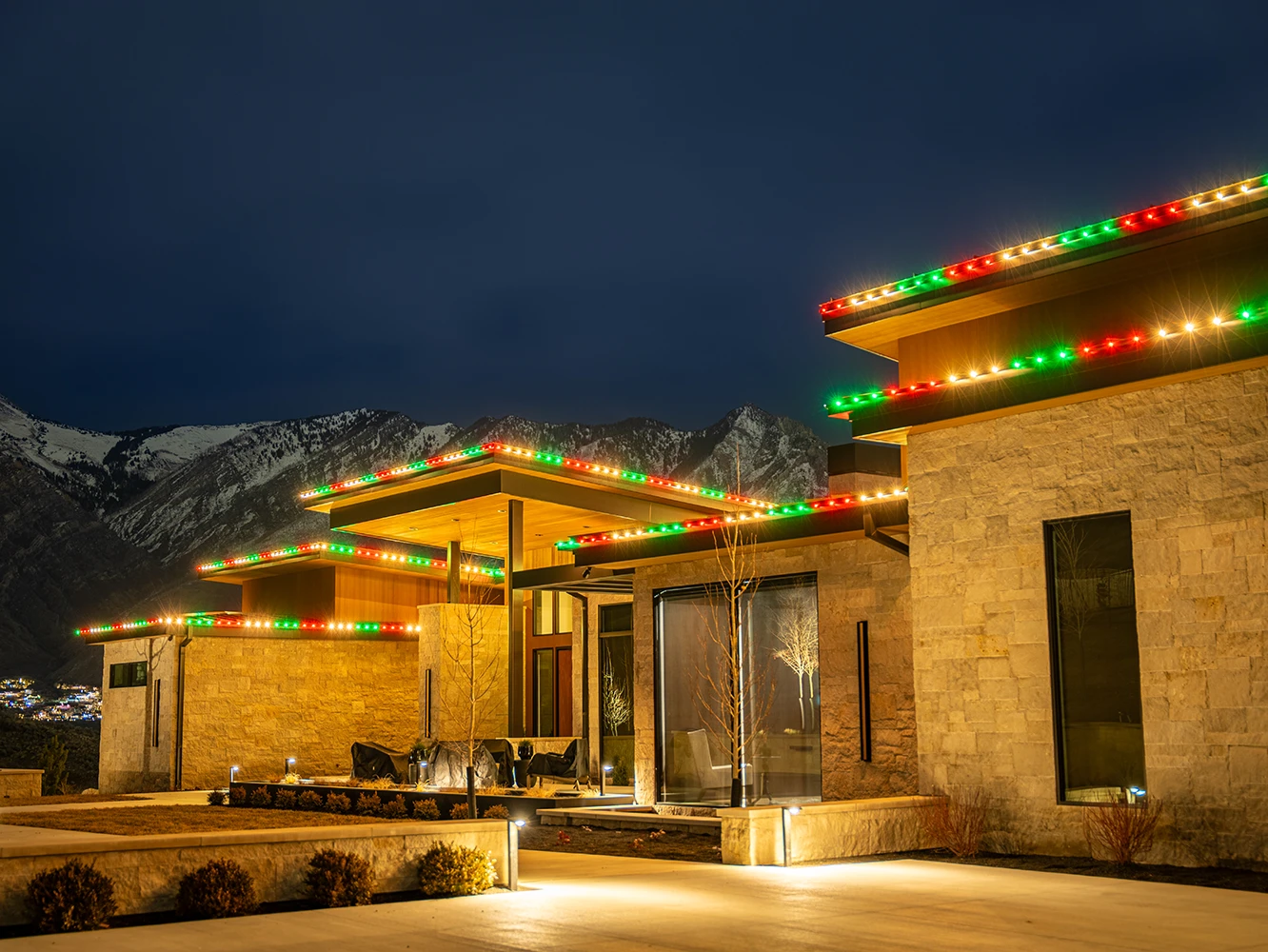 One Roofline, More Reasons to Light It Up
Permanent exterior lighting changes with your calendar instead of being removed and replaced. The best use is not a single color setting. It is having a home that is ready for the moment without creating another project for you.
For holidays, create classic red and green, patriotic color sequences, purple and orange, or elegant white patterns. For birthdays, graduations, weddings, and outdoor gatherings, match the lighting to the event. On game day, set the house to your team colors before guests arrive. Then, when the occasion is over, switch back to warm white with a tap in the app.
That everyday setting has real value. A soft, even white line along the eaves can bring definition to the architecture after dark and make the property feel more welcoming. Used thoughtfully, it also supports visibility around entry points and walkways. Lighting is not a replacement for a complete security plan, but scheduled exterior illumination can help your home look occupied and make important areas easier to see.
Color Control Should Not Create More Work
The promise of smart lighting is convenience, not another complicated system to manage. Look for app-based control that lets you select colors, save favorite scenes, adjust brightness, and schedule when the lights turn on and off. A preset library is useful because not every occasion needs a custom design session.
Scheduling is where permanent RGBW lighting starts to feel like a genuine home upgrade. Set warm white to come on at dusk during the week. Schedule holiday colors for the days you want them. Turn the lights off automatically at bedtime. Whether you are home, traveling, or hosting friends, the exterior can stay on your schedule.
Pattern options matter, but restraint matters too. A moving rainbow effect may be perfect for a birthday party, while a slow patriotic fade may fit Memorial Day. For most evenings, lower-brightness warm white or a single refined color can look more premium than the brightest possible setting. Your home is the centerpiece. The lighting should frame it.
What Makes Outdoor RGBW Lighting Worth Installing Permanently
Exterior lights face heat, cold, rain, snow, wind, UV exposure, and the occasional stray ball. A permanent installation needs more than good color. It needs components designed for outdoor life, including weather-resistant construction, secure mounting, protected wiring, and a controller built to handle regular use.
Placement matters just as much. Fixtures installed beneath soffits, trim, or flashing can remain discreet during the day, then cast light outward at night. The goal is a clean daytime appearance without visible strings drooping across gutters or clips crowding the roof edge. Good spacing and orientation create an even glow instead of obvious dots or dark gaps.
LED life expectancy is another long-term consideration. A system rated for tens of thousands of hours can save homeowners from the cycle of replacing failed seasonal strands. Still, lifespan claims should be paired with warranty coverage and real support. Permanent lighting is an investment in your home, and the company behind it should be ready to support both the product and the installation.
Professional Installation or DIY: Choose the Right Path
There is no single right way to get permanent lighting on your home. It depends on your comfort level, roofline complexity, and how much of the project you want to own.
A DIY kit can be a strong fit for hands-on homeowners with a straightforward layout who want professional-grade components at a more accessible price. Measure carefully, plan power and controller locations before you begin, and do not treat ladder safety as an afterthought. A little preparation prevents uneven runs, rushed wiring decisions, and unnecessary rework.
Professional installation makes sense when the roofline is tall, complex, or difficult to access, or when you simply want zero fuss. A trained installer can assess the property, recommend fixture placement, complete the mounting and wiring, and help configure the system. You get the finished look without spending a weekend high above the driveway.
Commercial properties often benefit from professional planning as well. Restaurants, retail storefronts, event venues, and offices need lighting that supports their brand without becoming another maintenance headache. Programmable RGBW lighting can keep a building polished year-round while making promotions and community events more visible.
How to Get the Best Look From Your System
Before choosing colors, look at the architecture. Homes with light siding, stone facades, dark brick, deep eaves, or tall peaks reflect light differently. Warm white usually flatters nearly every style, while saturated colors can look dramatically brighter on pale surfaces than on dark ones. Start with a brightness level that feels intentional, then adjust from there.
Keep your everyday scene simple. Warm white on the main roofline may be all you need for a refined nightly look. Save more elaborate patterns for holidays and celebrations, where movement and color have a reason to take center stage.
It also helps to think beyond December. The real return on permanent lighting comes from using it throughout the year: welcoming guests, highlighting a freshly landscaped yard, celebrating milestones, and giving your home a finished nighttime presence. With more than four billion color possibilities and true warm white in the same system, you are not buying holiday lights that happen to stay up. You are adding a new layer of control to your home.
A well-planned RGBW system should disappear into your roofline by day and make the house feel unmistakably yours by night. That is the kind of upgrade you will appreciate long after the decorations are packed away.