
Top 5 DIY Outdoor Lighting Systems Compared
There are many different forms of DIY outdoor lighting available, ranging from $15 solar stakes to full permanent LED systems running along your entire roofline. None of these solutions solve the same problem, and the right solution for you will depend on the function you want the lighting to provide and the amount of time and effort you’re willing to spend on installation.
Solar Light Solutions
Solar lights offer the simplest way to add outdoor lighting to your home. They require no wiring, no power outlet, and no special tools. Simply place them in the desired location and the lights will charge throughout the daylight hours and automatically turn on at dusk.
While solar lights are convenient to install, they aren’t perfect. Their greatest weakness is performance and reliability. Budget path lights ($3 to $10 each) produce very little light (6 to 20 lumens), while higher-end path lights ($15 to $30 each) may produce 50 to 150 lumens. However, performance decreases when placed in shaded areas and during cold winter months. While the LED component has a lifespan of several years, the battery is the primary failure point of solar lights, with standard NiMH batteries lasting one to two years and lithium-ion batteries lasting three to five years.
Best for: Adding lighting to pathways and garden accents; lighting areas that are far from outlets; renters; providing supplemental lighting to a permanent roofline system for walkways and garden areas that roofline lighting doesn’t reach.
String and Cafe Lights
String lights may offer the largest aesthetic impact for the lowest cost of any outdoor lighting solution. One hundred feet of LED cafe lights can be purchased for anywhere from $25 to $80 and can greatly enhance the ambiance of a patio area.
LED cafe lights have a lifespan of 15,000 to 50,000 hours and use up to 90 percent less energy than traditional incandescent bulbs. Installing cafe lights is also relatively easy: hang them between anchor points and connect them to a GFCI-protected outlet.
Cafe lights have a limited lifespan for permanent outdoor exposure. Most string lights sold to consumers have an IP44 rating, which means they can handle rain but not prolonged exposure to the elements. Additionally, the insulation on the wires begins to degrade from UV exposure within two to three years if installed permanently. String lights perform well on covered patios but aren’t designed for permanent roofline mounting.
Best for: Creating ambiance on patios, decks, and other entertaining spaces; creating a festive atmosphere for holidays and celebrations; temporary or semi-permanent applications using a protective covering.
Landscape Lighting Kits
Landscape lighting kits provide actual illumination for your home. DIY kits that include eight LED fixtures, a transformer, and wire can be purchased for anywhere from $80 to $140. These kits operate at 12 volts, so a permit isn’t required for installation and there’s no risk of electrical shock during the process.
More time is spent on the installation of a landscape lighting kit than with the previous two options. The installer will need to dig trenches for wire to be buried at least six inches deep through lawn areas, mount the transformer, and position each fixture. This type of project can take a full day to complete for a first-time installer.
The payoff is worth the effort though. With a landscape lighting kit, you can count on consistent and reliable light every evening regardless of weather conditions or time of year. High-quality brass fixtures can last for many years.
Best for: Illuminating walkways and driveways; lighting up trees; creating a professional-looking ground-level lighting system long-term; combining with permanent roofline LEDs for total exterior coverage.
LED Strip Lights
LED strip lights are the cheapest form of wired outdoor lighting available. Prices vary based on quality but generally range from $0.40 to $2.50 per linear foot. Most outdoor-rated LED strip lights feature IP65 ratings, app control, and compatibility with either Alexa or Google Home.
LED strip lights are only suitable for accent lighting though. They lack sufficient intensity to create actual illumination, and the adhesive backing that simplifies installation is prone to failure from heat cycling and UV exposure within one to three years. Aluminum channel mounting can extend the lifespan of strip lights but increases the overall cost.
Best for: Accentuating the underside of eaves; highlighting deck rails; short runs where color is more important than brightness; supplementing permanent roofline LEDs with additional accent lighting.
Permanent Addressable LED Lighting Systems
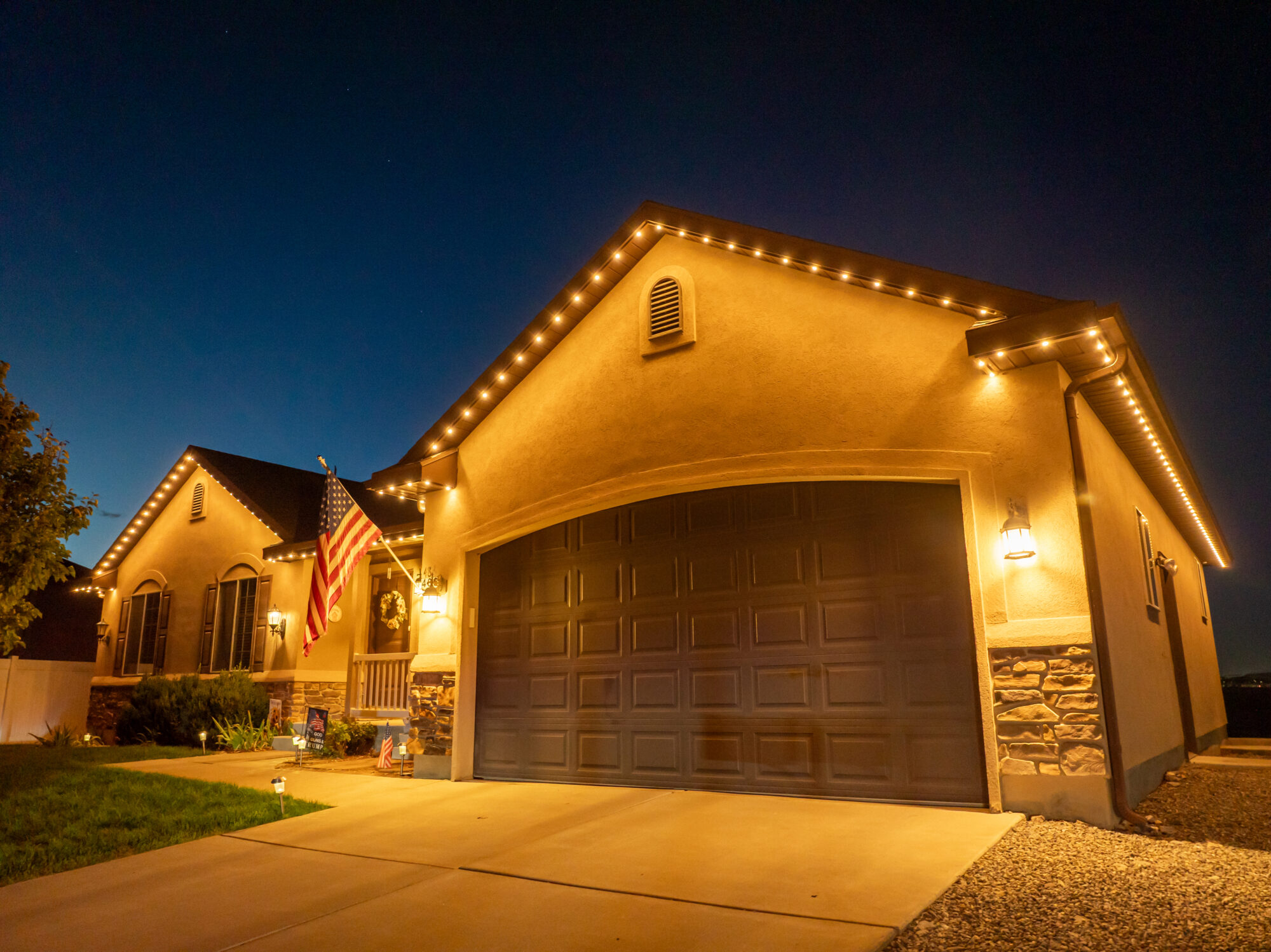
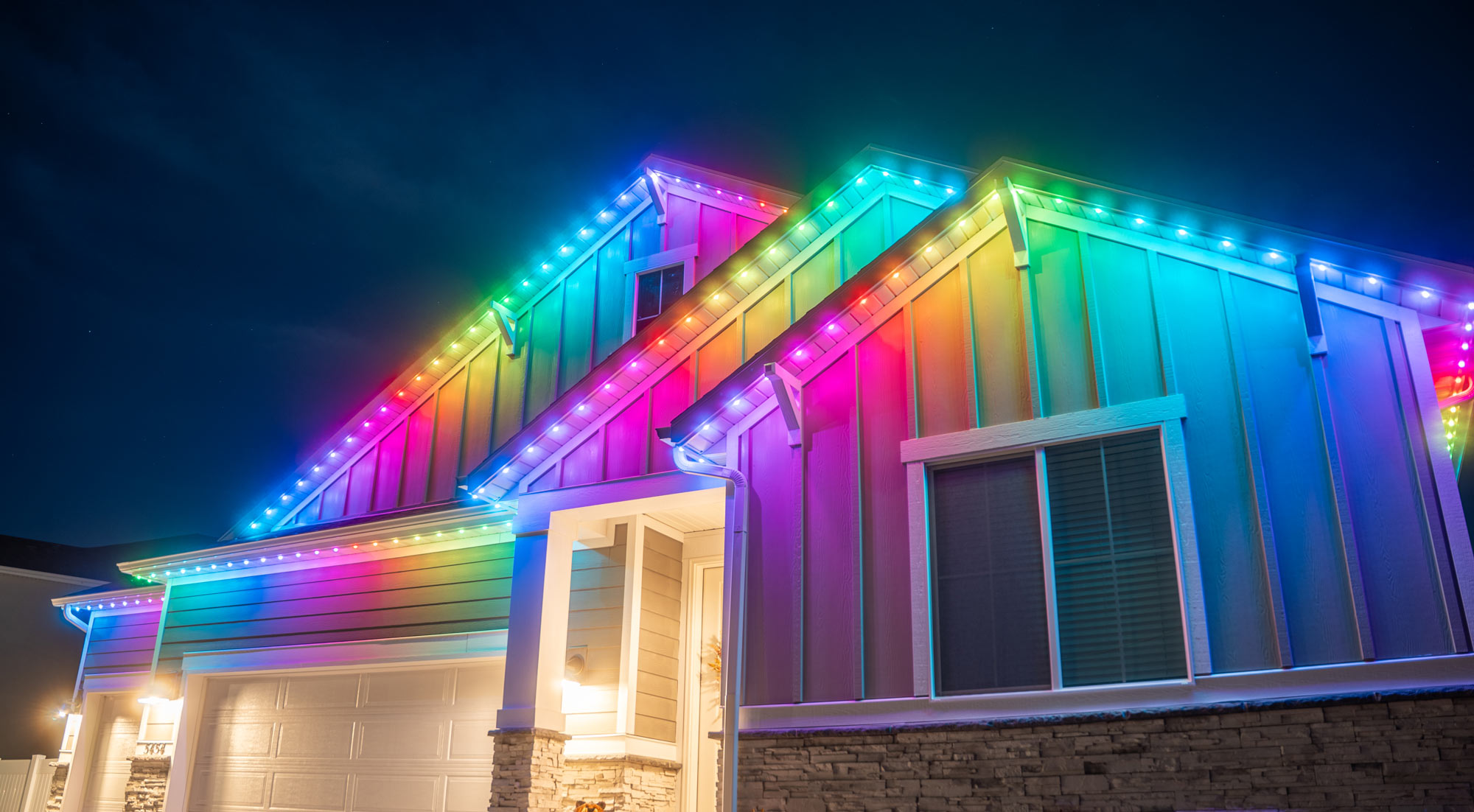
Each of the previous four options serves a specific purpose for outdoor lighting, but none of them were designed to remain mounted on your roofline permanently. Permanent LED systems were. These systems mount to a channel along your roofline and remain there throughout the year. Each pixel is individually programmable and app-controlled, allowing you to display warm white on a weeknight and full-color animations for holidays without physically touching the lights.
EverLights ClickLights use RGBW LED pixels spaced 9 inches apart, generating more than 4 billion possible colors, including a dedicated white channel for clean warm white output. They can also be installed downward facing as soffit lighting. The pixels carry an IP67 rating and feature an LED lifespan of 50,000 hours, or roughly 23 years of use at six hours per day.
According to the U.S. Consumer Product Safety Commission, there are approximately 160 reported decorating-related injuries per day during the holiday season, with almost 50 percent caused by falls. Once a permanent system is installed, it eliminates the need for homeowners to climb ladders or hire crews to install and remove holiday lights each year.
EverLights offers complete DIY bundles for permanent LED systems. For homeowners who currently pay to have seasonal lights installed annually, the initial cost of a permanent system will likely pay for itself within a few years.
Comparative Analysis of DIY Outdoor Lighting Options
| Feature | Solar | String | Landscape | LED Strips | Permanent LED |
| Average Lifespan | 2-5 years | 3-10 years | 10-20+ years | 1-3 years outdoors | 17-23 years |
| Weather Rating | Varied | IP44-IP65 | IP65+ | IP65 | IP67 |
| Smart Control | Rare | Some | Some | Common | Yes |
| Year-Round | Yes | No | Yes | Limited | Yes |
| Installation Difficulty | Very Easy | Easy | Moderate | Easy | Moderate |
Features to Consider When Purchasing a Permanent System
When purchasing a permanent lighting system, the following features matter most for a DIY installation:
- Minimum IP67 rating. Any product intended to be mounted on your roof and exposed to rain, snow, and extreme temperatures requires at least an IP67 rating.
- Adhesive-free channel mounting. Mounting LED lights in an aluminum channel protects them from extreme temperatures and allows for easier removal for maintenance. Adhesive-based mounts will fail within one to three years in harsh environments.
- RGBW instead of RGB. The inclusion of a dedicated white LED results in far superior white light compared to blending red, green, and blue. If you plan to use your lights year-round, this is an important consideration.
- Quality app features and smart home integration. Look for apps that allow you to schedule lighting scenes and control multiple zones independently. EverLights supports both Alexa and Google Home.
- A minimum three-year warranty is recommended for items that will be installed permanently on your home. EverLights offers a 5-year warranty on professional installations with a 1-year labor warranty.
To learn more about the differences between DIY and professional permanent lighting installations, including what each option involves and what to expect, see the DIY vs. professional installation guide.