
A bright porch light can help you find the front door. The right permanent lighting can make the whole home look finished, festive, and safer after dark. When homeowners compare led strip versus soffit lights, the real question is not simply which one is brighter. It is which system creates the look you want, holds up outdoors, and saves you from dragging out ladders every holiday season.
LED strip lighting and soffit lighting can both elevate an exterior, but they do very different jobs. One is typically used for a continuous line of light and accent effects. The other is designed to define the roofline, architectural details, and the home itself. Understanding that difference helps you spend wisely the first time.
LED Strip Versus Soffit Lights: The Core Difference
LED strip lights are flexible circuits with closely spaced LEDs. They are commonly mounted beneath railings, along deck edges, around patios, under cabinets, or in channels that hide the individual diodes. Their biggest visual advantage is continuity: instead of separate points of light, a strip can create an unbroken glow.
Soffit lights are installed beneath the eaves, often behind the fascia or trim line. Depending on the system, they may be recessed downlights or individual permanent RGBW lights placed at measured intervals. Their job is to cast light down a wall, out onto the ground, or across the front of the home in defined pools of color and white light.
That distinction matters at night. A strip tends to highlight an edge or wash a surface with ambient light. Soffit lighting makes the roofline and facade more visible from the street. If you want your house to wear holiday colors, celebrate game day, or look polished every evening, the soffit approach usually delivers the bigger visual transformation.
Choose the Look You Want After Dark
The best choice starts with the effect you want people to see from the curb.
When LED strips make sense
LED strips are a strong fit when the light source itself should disappear and the glow is the main feature. A warm-white strip beneath a deck cap, for example, can make an outdoor living area feel more inviting without calling attention to individual fixtures. Along a patio ceiling or under a handrail, strips can improve wayfinding while keeping the mood relaxed.
They also work well in tight, linear spaces. If there is a clean channel, lip, or overhang that protects the strip and hides the diodes, the result can look intentional. For homeowners focused on patios, pergolas, steps, or landscape accents, strips may be exactly what the project needs.
The trade-off is distance. A strip tucked under an eave may not be visible from the street, especially on a two-story home. It can produce a beautiful glow close up while doing very little to showcase the home’s architecture at a distance.
When soffit lights make sense
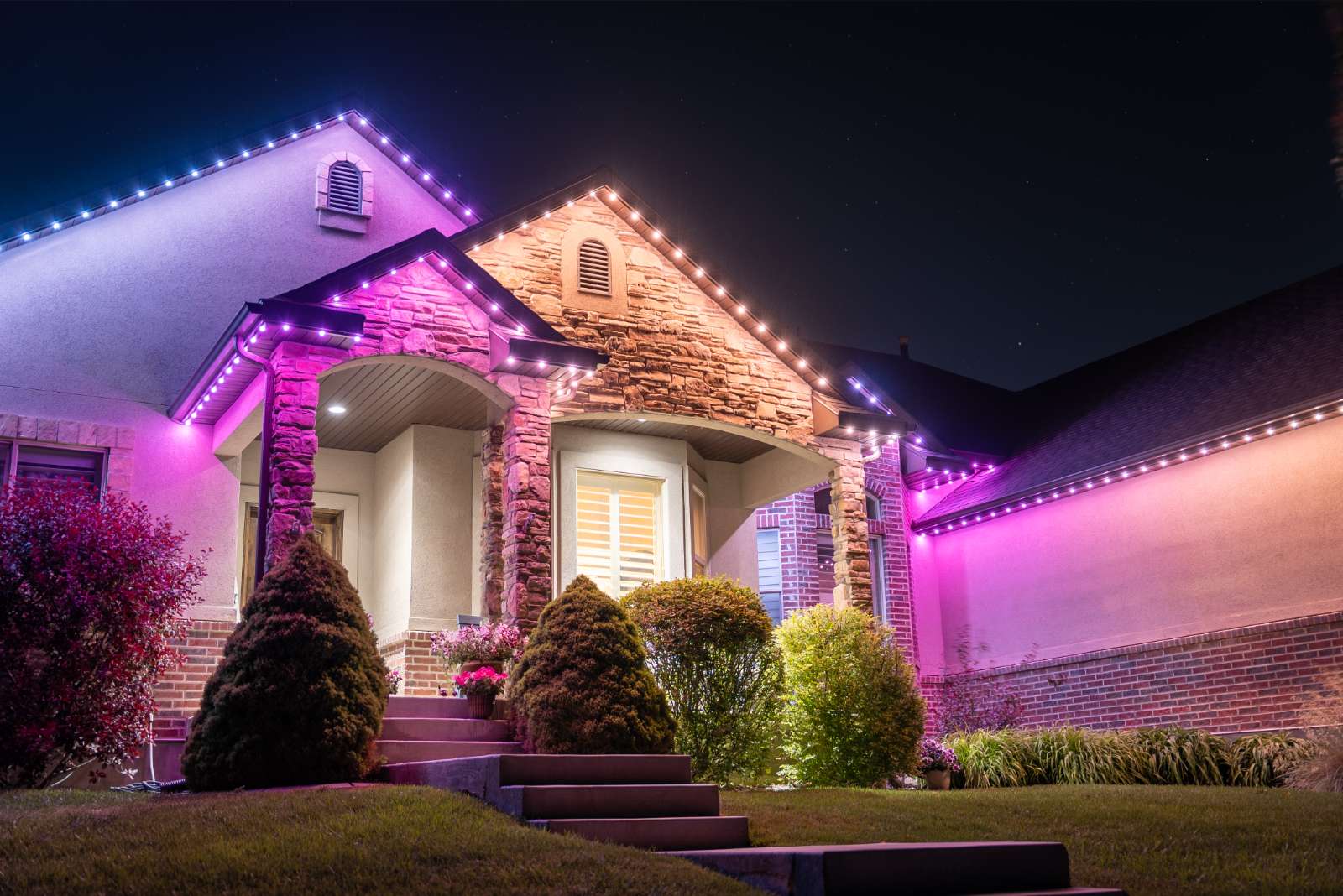
Soffit lights are built for the long view. Spaced along the roofline, they create a clean rhythm that draws attention to peaks, gables, dormers, and the front elevation. With programmable color, the same lights that look crisp in warm white on a normal Thursday can turn red, white, and blue for July Fourth or your team’s colors for a big game.
For many homes, the most satisfying effect is wall washing. Each light projects onto the siding, brick, or stone below it, creating a series of even, intentional light patterns. This adds depth to the facade rather than outlining it like a string of seasonal bulbs.
Soffit lights also pull double duty. A well-planned warm-white setting can light walkways, entrances, and darker areas around the home without making the property look like a parking lot. That added visibility is useful when guests arrive, packages are delivered, or you simply want to light it up for security.
 Daytime Appearance Matters More Than You Think
Permanent exterior lighting should look just as good at noon as it does at midnight. This is where installation method and product design matter as much as the LEDs themselves.
Basic LED strips can be hard to conceal. Adhesive-backed strips may sag, collect debris, or become visible from below if they are not installed in a proper outdoor-rated channel. Exposed wiring, connectors, and power supplies can also turn a clean lighting idea into a project that looks temporary.
Quality soffit lighting is designed to sit discreetly under the roofline, trim, or flashing. When the lights are off, the goal is simple: people notice your home, not your lighting hardware. At night, the home changes character with the tap of an app. That is the appeal of a permanent system – it gives you the fun without the seasonal clutter.
For a DIY homeowner, a configurable system can be a practical middle ground. EverLights ClickLights, for example, are designed to bring a professional-grade permanent-lighting look within reach for homeowners who are ready to handle their own installation. If roofline access, electrical planning, or custom trim work feels outside your comfort zone, professional installation is often worth it for the finished appearance alone.
Compare Durability Before Comparing Price
An inexpensive strip kit can be tempting, especially for a small patio project. But a roofline is not a sheltered indoor shelf. It sees summer heat, winter cold, rain, wind, UV exposure, and repeated expansion and contraction. Any exterior lighting system needs weather-resistant components, secure mounting, protected connections, and a power plan that is appropriate for its length.
Outdoor LED strips vary widely. Some are genuinely rated for wet locations, while others are better suited to covered spaces. Their weak points are often the cut ends, connectors, adhesive, and controller rather than the LEDs themselves. A strip can be durable when it is installed in a quality channel with sealed connections, but that adds materials and planning.
Permanent soffit systems are purpose-built for this environment. The lights, wiring, mounting components, and control system are intended to operate as one exterior installation. Look beyond a product’s color options and ask about weather resistance, expected operating life, warranty coverage, repair support, and whether individual sections can be serviced. A lighting system should feel like a home improvement, not another item on the annual maintenance list.
Color, White Light, and Control Are Not Equal
Many LED strips can produce impressive colors, but not every strip creates a flattering white light. That matters because most nights are not holidays. You may want soft warm white for curb appeal, clear white near an entry, and rich color only when the occasion calls for it.
RGB strips mix red, green, and blue to approximate white, which can look cool or slightly tinted. RGBW systems include a dedicated white LED, giving you more natural warm-white lighting alongside vibrant color effects. If your main goal is occasional accent lighting around a patio, standard RGB may be enough. If you want lighting that earns its place year-round, dedicated warm white is a meaningful upgrade.
Control is another dividing line. A simple strip may rely on a remote with a short range and a few preset modes. A permanent soffit system should make everyday use easy through app control, scheduling, zones, brightness adjustments, and saved patterns. The point is zero fuss: set warm white to come on at dusk, schedule holiday colors ahead of time, and stop climbing a ladder to make your home look ready for the season.
Installation Is Where the Decision Gets Real
LED strips are generally easier to shape around corners and shorter runs. That flexibility is valuable for do-it-yourself projects around a deck, pergola, or covered patio. Still, outdoor installation takes more than sticking lights in place. You need clean cable routing, solid attachment, protected power, and enough planning to avoid bright gaps or visible connectors.
Soffit lighting requires more precise layout because fixture spacing affects the final wall pattern. Roof peaks, gutters, outlet locations, trim details, and access all need attention. On a single-story home with accessible soffits, a confident DIYer may be comfortable with the work. On taller homes or complex rooflines, hiring a professional can save time, improve symmetry, and keep the project safely off the ladder.
Do not choose strips just because they appear easier at checkout. A poorly placed strip can be more frustrating than a carefully planned soffit installation. Likewise, do not install roofline lights simply because they are popular if your real goal is a subtle, close-range patio glow. The right location determines the right product.
Which Option Delivers Better Long-Term Value?
For a targeted accent project, LED strips can offer excellent value. They are flexible, often lower cost upfront, and ideal for creating ambiance in outdoor spaces where people gather. Think under a pergola, beneath seating, along steps, or around a bar area.
For whole-home curb appeal, recurring holiday use, and practical exterior illumination, soffit lights generally provide more value over time. They replace the annual cycle of buying clips, untangling strands, testing bulbs, climbing ladders, taking everything down, and finding storage space. They also make the house usable as a canvas for more than December.
The upfront investment is higher because you are purchasing a permanent system and a more involved installation. But the return is visible year-round: a more defined home after dark, lighting for celebrations on demand, and a polished setup that is ready whenever you are.
Make the Choice Based on the Space, Not the Trend
Choose LED strips when you want a hidden line of ambient light in a protected, close-up outdoor area. Choose soffit lights when you want to highlight the home’s architecture, create a street-visible lighting display, use warm white regularly, and ditch the ladders for good.
Some properties benefit from both. Soffit lights can give the home its signature nighttime presence, while strips add comfort around a patio or deck where family and guests spend time. Start with the part of your home you want to enjoy most after sunset, then choose lighting that makes that moment easier, safer, and worth celebrating.