
A dark storefront after closing, a bland office entrance during the holidays, or a venue that looks exactly the same for every event can all leave value on the table. Commercial permanent lighting gives a property a polished, programmable identity without asking staff to climb ladders, untangle strands, or manage temporary decorations every season.
For businesses, lighting is not just a holiday expense. It is a practical way to strengthen curb appeal, support promotions, improve visibility, and create a more welcoming property every night of the year. The right system stays discreet during the day, then puts the building to work after sunset.
Why commercial permanent lighting earns its place
A commercial property has more to communicate than a home. A restaurant wants to feel inviting from the street. A retail center needs to look active after dark. A dealership may want to celebrate a sales event, support a local team, or give its lot more visual presence. An office campus can recognize holidays without turning maintenance into a recurring project.
Traditional seasonal lighting can accomplish part of that, but it comes with a familiar cycle: schedule installation, pay for labor, deal with failed strands, remove everything, and find storage space until next year. That approach becomes especially frustrating across larger facades, multiple locations, or properties with difficult rooflines.
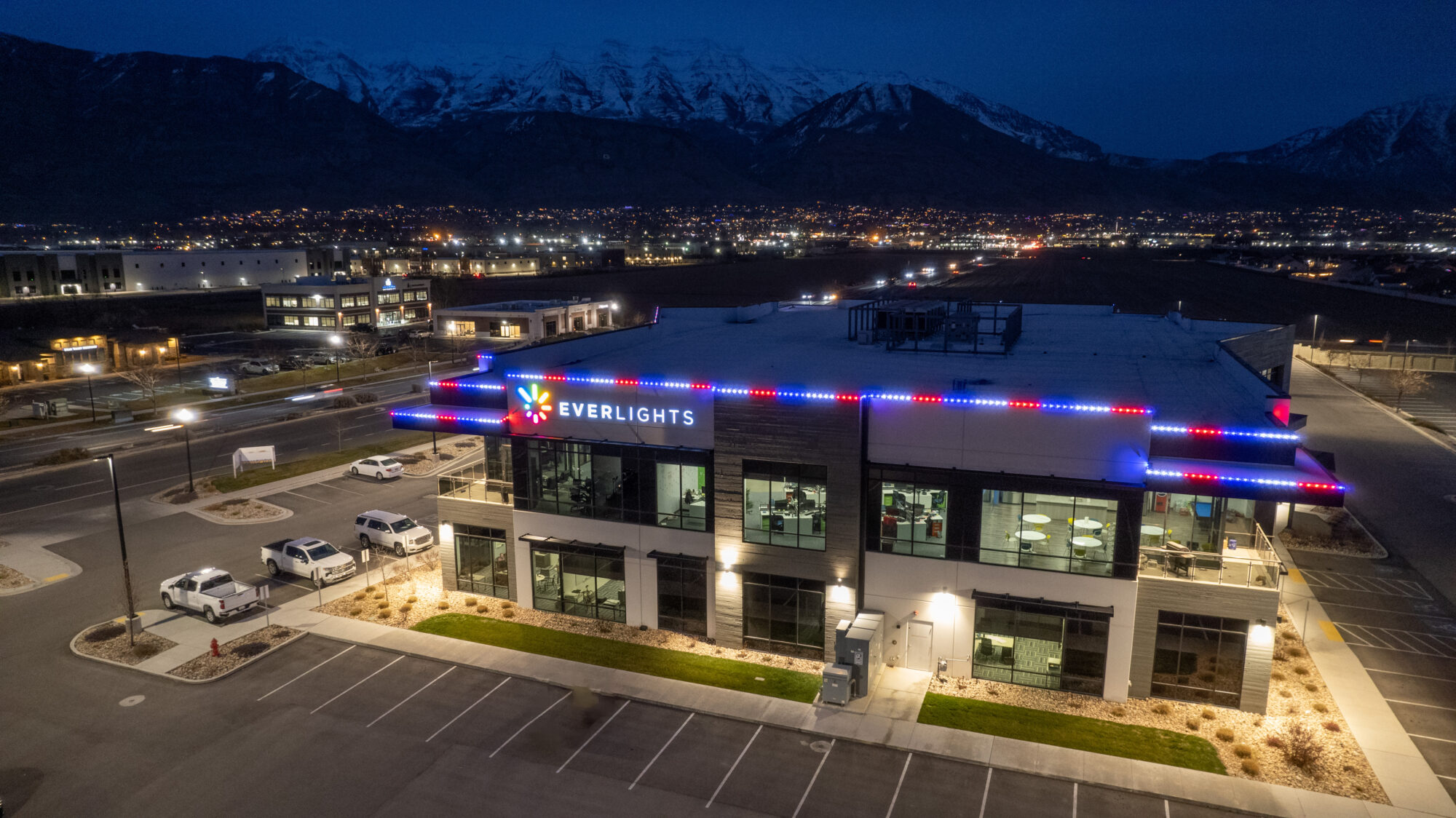
Permanent lighting changes the math. Professionally placed along soffits, trim, or flashing, the system remains hidden from normal daytime views. At night, programmable RGBW lights can shift from clean warm white to holiday colors, brand-inspired palettes, team colors, and animated patterns in seconds. The building is ready when the calendar changes – not weeks after a crew becomes available.
 More than holiday lights for a business
The strongest commercial installations have a job to do in every season. Holiday displays may be what first gets attention, but year-round use is what makes the investment more compelling.
Warm white architectural lighting can add definition to rooflines and entryways on ordinary evenings. It helps a property look cared for after operating hours, which matters for businesses competing for drive-by attention. During promotions, a manager can switch to a bold color scene that supports a grand opening, sale, fundraiser, or community event.
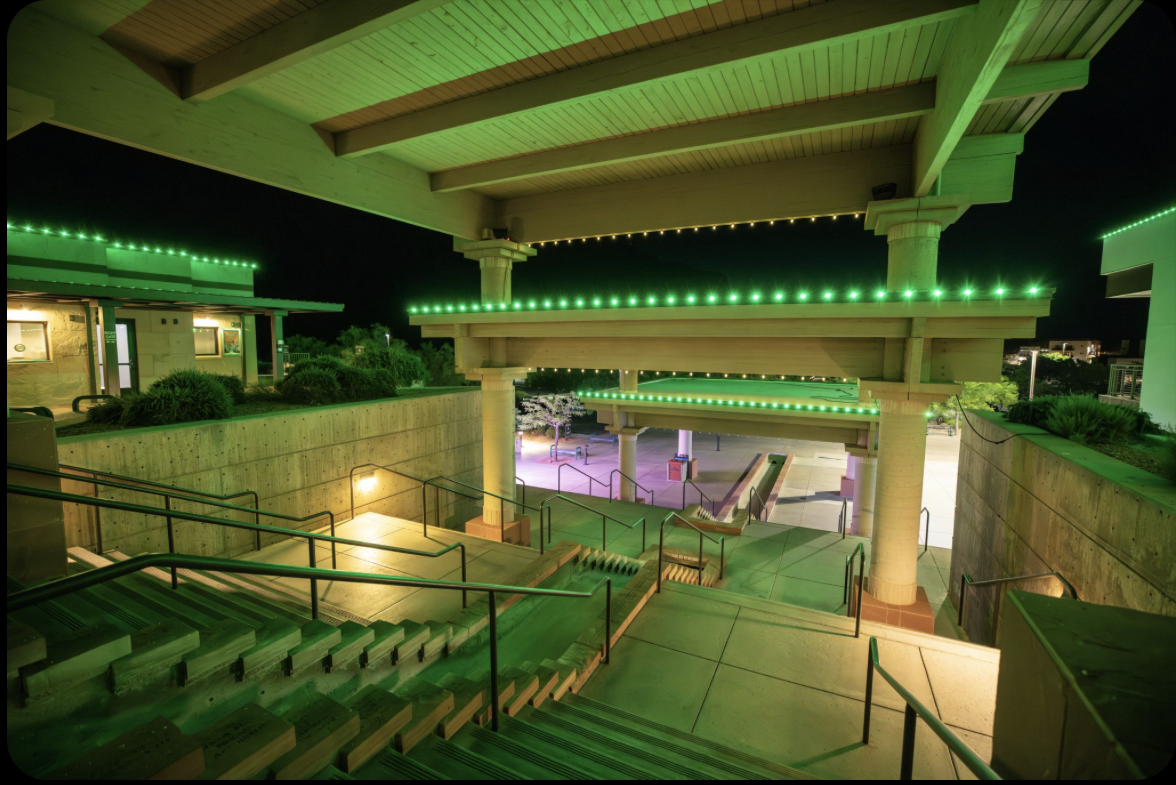
For sports bars, schools, community centers, and venues, color changes can become part of the experience. A local team wins, and the building can light up in team colors that night. For hotels and event spaces, lighting can complement weddings, conferences, galas, and seasonal programming without renting a new decorative solution each time.
There is also a practical security benefit. Exterior illumination makes paths, entry points, and building perimeters more visible. Permanent lighting is not a replacement for purpose-built security fixtures or cameras where those are needed, but it can improve the overall sense of safety and eliminate dark, neglected-looking edges of the property.
What to look for in a commercial system
Not every permanent lighting product is designed for commercial expectations. A low-cost string-light setup may look fine for a short season, yet struggle with weather exposure, color quality, control limitations, or the demands of a larger property.
Start with light quality. RGBW matters because it adds a dedicated warm-white channel rather than trying to create white by mixing colors. That difference is easy to see when the goal is a sophisticated architectural look instead of a party effect. A restaurant, professional office, or high-end retail property may use warm white most nights, so this feature should not be treated as an extra.
Next, consider output, placement, and visibility. More brightness is not automatically better. Lights installed too close together or aimed poorly can create hot spots and glare. On a large facade, the goal is a crisp, even outline that looks intentional from the street. A qualified design consultation can help determine spacing, controller placement, power needs, and which elevations deserve the most attention.
Durability is equally important. Commercial exterior lighting faces heat, cold, moisture, wind, and long operating hours. Look for weather-resistant components, a strong warranty, and a realistic service path if a component needs attention. A system rated for a 50,000-hour life expectancy can deliver years of use, but installation quality and local conditions still affect long-term performance.
Finally, insist on control that fits the people running the property. App-based scheduling lets a manager automate opening-night scenes, everyday warm white, holiday programs, and shutoff times. That means fewer manual tasks and less risk that lights are left running overnight simply because someone forgot to change a switch.
Professional installation or a DIY approach?
The right path depends on the property, not just the budget. A small owner-operated storefront with accessible eaves may be a good fit for a capable DIY buyer using professional-grade components. This option can lower upfront costs while still delivering a clean, customized result.
For larger buildings, multi-tenant properties, high rooflines, complex architectural details, or owners who want a turnkey experience, professional installation is usually the smarter move. An experienced installer can account for mounting surfaces, wire runs, power distribution, controller locations, and the details that keep the final look clean. Commercial projects also benefit from having a clear point of contact for setup, training, and support.
The trade-off is straightforward: DIY can save money when the scope is manageable and the owner has the skills, equipment, and time. Professional installation costs more upfront, but it reduces risk and avoids asking employees to handle work that may be better left to trained crews.
Plan scenes that support the business
A permanent system becomes more valuable when it has a simple operating plan. The temptation is to use the brightest, busiest pattern every night. In most cases, that can make a property feel less premium rather than more memorable.
Set a dependable default first. For many commercial properties, that means warm white lighting that outlines the building after sunset and turns off on a schedule. Then create a small library of event scenes: holiday colors, school or team colors, a grand-opening sequence, and perhaps a seasonal palette for spring or summer events.
Keep the setting appropriate for the business and its neighbors. A family restaurant may benefit from a gentle red, white, and blue display around Independence Day, while a late-night entertainment venue may have more room for movement and saturation. If the property is near residences, schedules and brightness deserve extra care. Great lighting attracts attention without becoming a nuisance.
For organizations with multiple managers, decide who controls the account and who can adjust scenes. A little structure prevents accidental changes during an important promotion or a holiday weekend. It also ensures the property maintains a consistent look even when staff members change.
The long-term value is in the repeat use
Commercial permanent lighting is not a one-night decoration. It is a property improvement that can serve marketing, ambiance, visibility, and seasonal celebration from the same installed system.
That does not mean every business needs the largest display or every available animation. A modest, well-designed installation on the most visible roofline can make more of an impression than a sprawling setup with no plan. The best design reflects how customers approach the property, where they enter, and what the building should communicate after dark.
EverLights systems pair true RGBW color, programmable patterns, and app-based control with a discreet daytime profile, giving commercial owners a way to keep their properties ready for the next event without adding another seasonal maintenance headache.
When the lights can shift with your calendar, your promotions, and your community, the building stops disappearing at sunset. It becomes part of the reason people notice, remember, and return.