
When looking for permanent lights to hang outside your house, the first major decision you’ll need to make is whether to do the installation yourself or hire a professional to do it for you. While the choices of which lights to use, how to control them, and where to place them are important, installing permanent lights is fundamentally about choosing how to accomplish the task and what level of support you will have after it is done.
The reality is that, regardless of which method you choose, your permanently installed outdoor lighting will run using the exact same EverLights technology: the same RGBW LEDs, same app, same Alexa and Google Home integration, and same 50,000-hour rated lifespan.
What DIY Installation Involves
EverLights ClickLights arrive as a complete system package containing everything you will need to install the lights on your home, with the exception of the channel in which the pixels will be mounted. The kit includes the light strands, power supply unit, network bridge, wireless receiver, and all connectors necessary for the system to operate. Channel for mounting the lights must be ordered separately, as the length required is specific to your individual roofline.
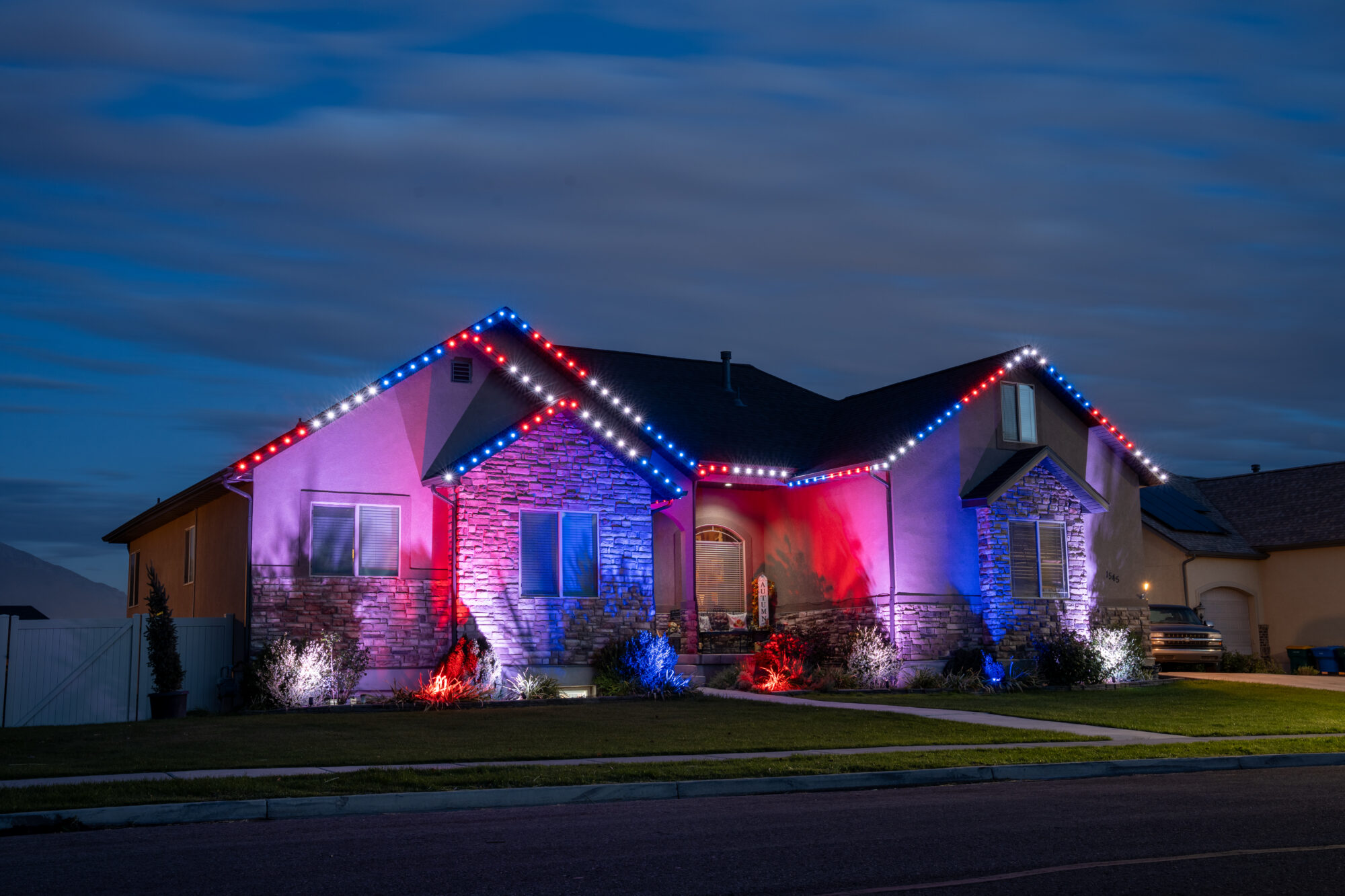 The DIY model is designed for the homeowner who is comfortable with basic hand tools and climbing ladders, without requiring electrical contractor experience. Several factors are worth considering before determining whether you can realistically complete the installation yourself.
Roofline type matters most. A single-story ranch-style home with a straight fascia and easily accessible gutters is likely to be a manageable weekend project for most competent DIY homeowners. ClickLights pixel units mount directly into fascia-mounted channel without much structural preparation. Multi-story homes with steeply pitched roofs, numerous peaks and valleys, or hip rooflines are significantly more complex and will require more time and more ladder work to complete.
Electrical access. The system requires a power supply point located along the roofline roughly every 75 feet. If you have existing exterior outlets in the correct locations, this will generally be straightforward. If you need to run new circuits or install new outdoor outlets, that becomes a separate project requiring a licensed electrician.
Time. EverLights estimates that most DIY installations take one to two days to complete, depending on roofline size and complexity. This is not a rush job. The connections must be made carefully, and the directionality of the pixel string needs to stay consistent throughout.
What the DIY kit does not include is a labor warranty. If a section of the system stops responding six months in, finding and repairing it is your responsibility. For homeowners who manage their own home maintenance and don’t mind that trade-off, it’s a reasonable path.
What Professional Installation Includes
Professional installation through EverLights covers the full process: site assessment, installation, wiring, app setup, and cleanup. What you get beyond the hardware:
- Fully concealed wiring, nothing visible from the ground or street
- Receivers, power supplies, and boosters placed and configured by experienced technicians
- A 5-year product warranty and 1-year labor warranty. If something fails in that window, a technician returns at no cost
- No ladder work on your end, ever
The labor warranty is meaningful for anything complex. A missed connection or an incorrectly seated component might not surface until months after installation. Professional installation has that covered.
One thing it does require is planning ahead. Depending on your market, finding availability during the peak holiday season can be difficult. To have lights up before the next holiday season, scheduling by late summer is generally the right move. Waiting until October often means waiting until the following year.
Safety Considerations
Many people buy permanent lights specifically to stop climbing ladders every holiday season.
Professional installation removes ladder work entirely. The crew handles everything from day one. You never go up.
DIY installation still requires one climb to complete the initial setup. After that, you’re done. No more annual untangling, no cold morning ladder climbs, no replacing bulbs at height. That one installation is the last time you’ll need to go up for the life of the system.
According to the U.S. Consumer Product Safety Commission, there are about 160 holiday decorating-related injuries every day during the holiday season, with nearly half involving falls. Both installation paths eliminate that annual exposure.
Which Option Is Right for Your Situation?
DIY permanent outdoor lighting typically works best when:
- Your home is single-story with accessible fascia or standard gutters
- Exterior outlets already exist in the right locations, or can be added without running new circuits
- You’re willing to commit one to two days to the installation
- You’re comfortable managing the system and handling any repairs yourself
Professional installation tends to make more sense when:
- Your home has a multi-story or complex roofline
- You want a labor warranty covering the work performed, not just the hardware
- A fully concealed, finished installation matters to you aesthetically
- You’d prefer not to be involved in any part of the process
Neither choice changes what the lights do. The app, the color options, the scheduling features, the 50,000-hour lifespan. It all works the same either way. What you’re deciding is who handles the installation and what your options are if something needs attention later.
If DIY is the right fit, EverLights ClickLights are available in 100, 150, and 200-foot bundles in both color-changing and classic white. For professional installation, visit the EverLights installation page to request a quote.