
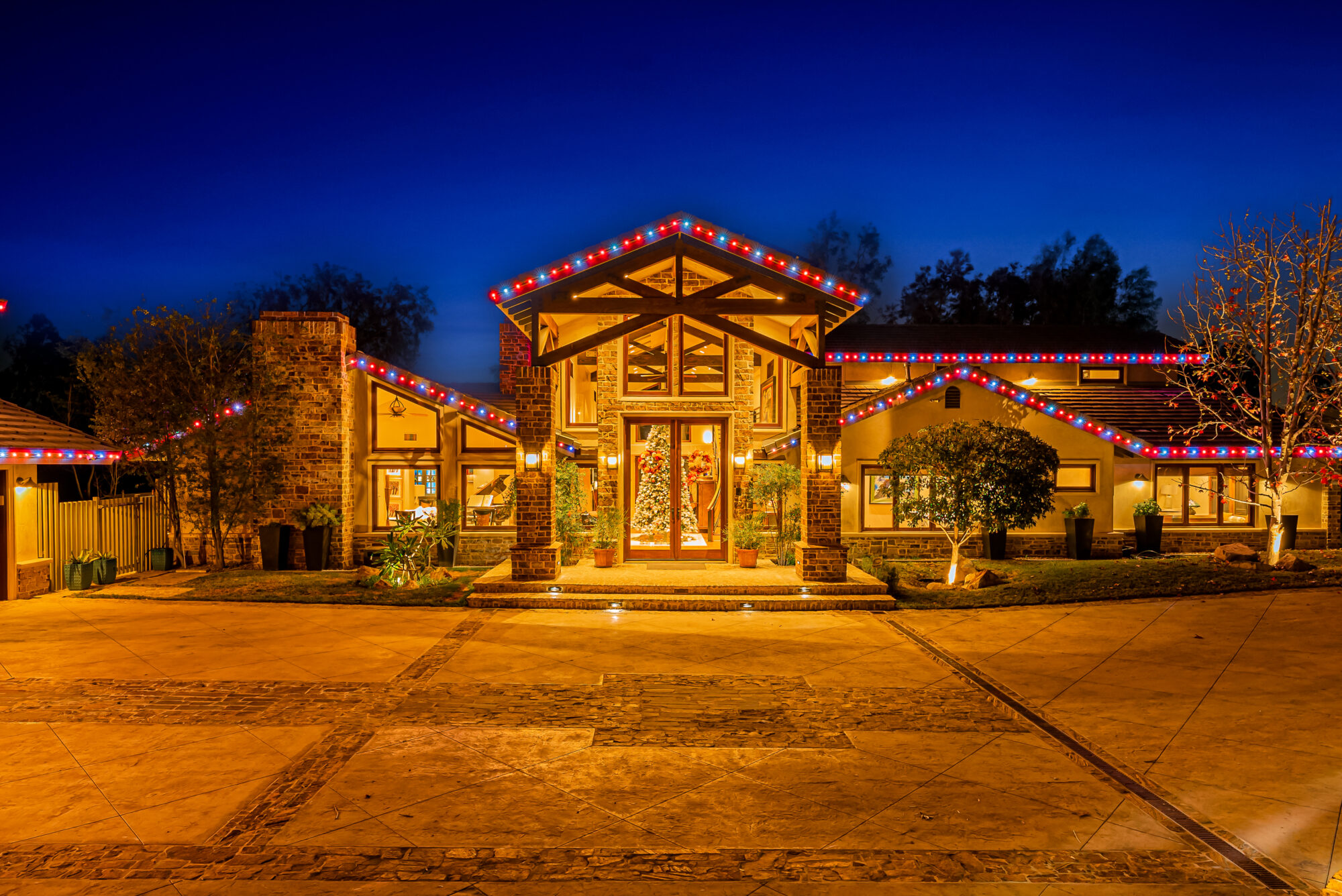
A beautifully lit roofline used to mean one thing: someone was on a ladder in cold weather, untangling strands and replacing bulbs. Learning how permanent Christmas lights work shows why more homeowners are ditching that annual routine for a system that stays installed, stays discreet, and is ready for every occasion.
Permanent lighting is not a strand of holiday lights left up all year. It is a purpose-built exterior system, typically mounted beneath soffits, trim, or flashing, that uses programmable LED modules, concealed tracks, dedicated power, and a smart controller. During the day, the installation blends into the home. At night, it can shift from a warm-white architectural glow to a full holiday display in seconds.
How Permanent Christmas Lights Work
The basic idea is simple: LEDs are permanently installed along the exterior of the home, then controlled from an app or control system. The details behind that simple experience are what make the system reliable, polished, and useful long after December.
A permanent lighting setup has four core parts: the light modules, mounting track, power supply, and controller. The modules are placed at consistent intervals so each light casts an even cone of color down the siding, stone, or trim. Rather than seeing exposed strings and loose wiring, guests see a clean line of light that makes the architecture stand out.
The controller is the brain of the system. It communicates with the lights and tells individual modules what color, brightness, and pattern to display. That is how one section of a roofline can glow red while another turns green, or how lights can chase, fade, sparkle, or stay a steady warm white.
Most premium systems use RGBW LEDs. RGB refers to red, green, and blue light, which combine to create millions of colors. The extra W stands for a dedicated white LED. That matters because warm white light looks richer and more natural than a white tone created by mixing red, green, and blue. For homeowners who want lighting that works for everyday curb appeal as much as Christmas, true warm white is a major advantage.
 The Lights Are Individually Programmable
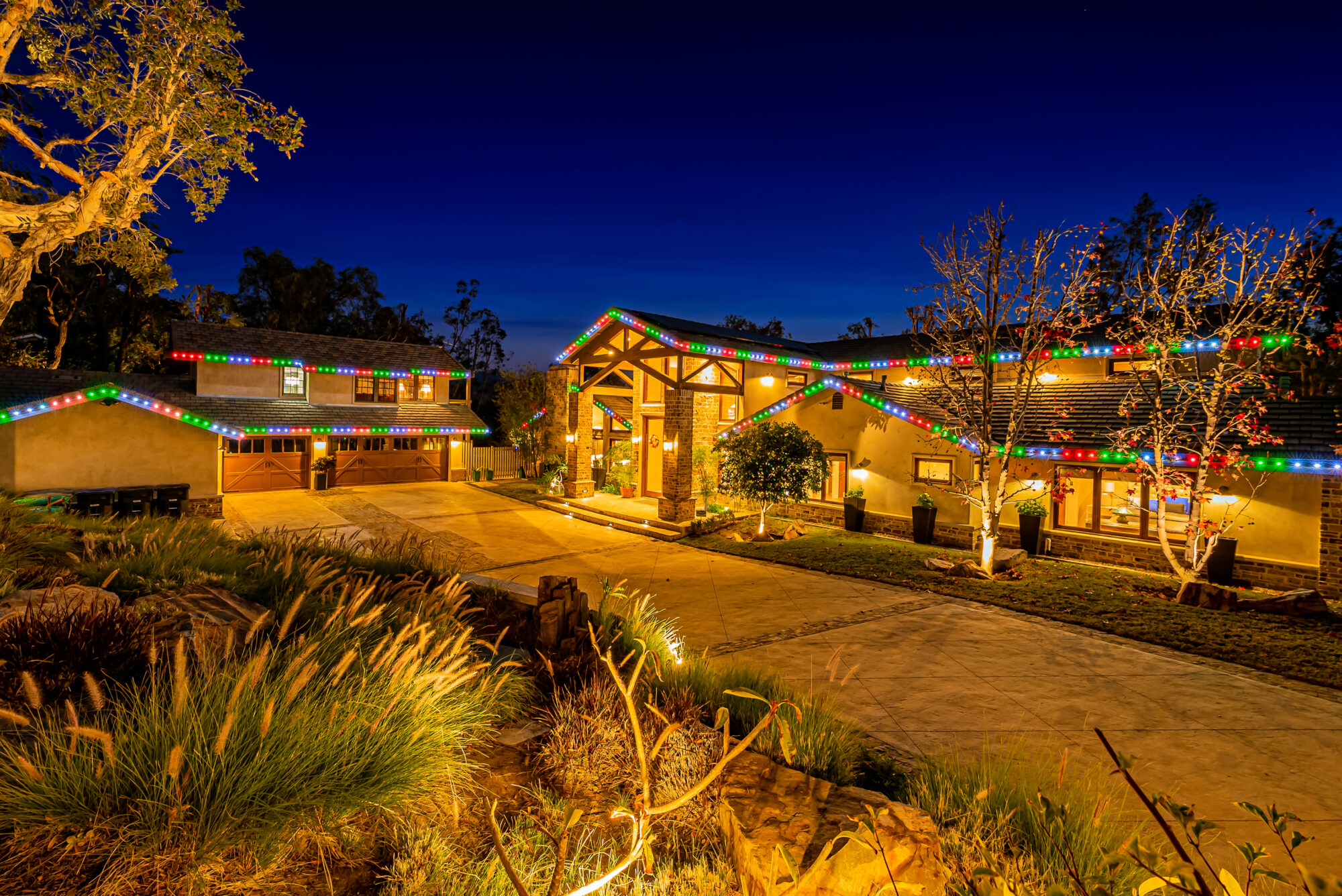
Permanent lights are usually addressable, meaning the controller can command individual lights or groups of lights independently. Think of each module as having its own place in the design.
That creates the effects people expect for holidays and celebrations, such as candy-cane stripes, team colors moving across the roofline, or red, white, and blue patterns for the Fourth of July. It also creates more subtle possibilities. You can set every light to the same soft warm white for a dinner party, use a low-level amber glow for an evening arrival, or highlight a commercial building in brand colors.
The available effects depend on the system and its app. EverLights systems, for example, pair RGBW lighting with more than four billion color options and more than 200 preset patterns. Presets make it easy to get a finished look without having to design an animation from scratch, while custom controls give homeowners room to make the display their own.
Where the Hardware Goes
The biggest question for many homeowners is whether permanent lights are visible during the day. A well-designed installation is meant to be discreet.
Lights are commonly installed under the soffit, along the fascia, behind trim, or within a color-matched channel. The exact placement depends on the home’s roofline, material, overhang depth, and the lighting effect you want. On a home with generous soffits, lights may be set back far enough to remain nearly invisible from the street. On tighter rooflines, a professional installer may use a different mounting approach to keep the appearance clean.
Spacing also affects the final result. Modules set too far apart can leave dark gaps. Modules installed inconsistently can make the light pattern look uneven. Permanent lighting is part technology and part exterior design, which is why planning the layout before installation matters.
The power supply and controller are generally placed in a protected, accessible location, such as a garage, utility area, or weather-protected exterior enclosure. Wiring runs from the controller to lighting zones, often following rooflines and trim so it remains out of sight. Larger homes or commercial properties may use multiple zones, controllers, or power supplies to support longer runs and more complex designs.
What Powers the System?
Permanent Christmas lights are typically tied into a dedicated electrical source. Depending on the system and installation, the lights may operate on low voltage after power passes through a transformer or power supply. This helps provide stable power to the LEDs while keeping the system designed for exterior use.
Power requirements are not one-size-fits-all. A small single-story home with one front roofline needs less capacity than a large home with peaks, dormers, patios, and a backyard entertaining area. The number of lights, maximum brightness, color choices, and animation settings can all influence the electrical plan.
White at full brightness often requires more power than certain color effects, so reputable systems are designed with power limits and proper zoning in mind. That is not a downside. It is simply why a quality layout accounts for the size of the property instead of treating every house like a basic plug-in light strand.
LED technology also keeps energy use practical. LEDs use far less electricity than old incandescent holiday bulbs, produce less heat, and are built for long operating life. Many permanent systems are rated for around 50,000 hours, though real-world longevity still depends on the product quality, installation, climate, and how often the lights run.
App Control Makes the Difference
The hardware makes permanent lighting possible. App control makes it convenient.
From a smartphone or tablet, homeowners can choose colors, select patterns, adjust brightness, and schedule scenes. Set warm white lights to come on at sunset. Schedule a Halloween display for the last two weeks of October. Turn on school colors before game day without stepping outside. When the season ends, switch back to a simple architectural look instead of removing anything.
Scheduling is especially useful for security and everyday routines. Exterior lighting can make the property feel occupied when you are away, brighten entry areas when guests arrive, and add visibility around the home after dark. Permanent Christmas lights are not a replacement for dedicated motion lights or a full security system, but they can be a helpful layer of exterior illumination.
Remote control is another practical benefit. If you are traveling, you can change the display without asking a neighbor to flip a switch. If weather turns rough, you are not outside taking down decor. And when a family celebration comes up unexpectedly, the home can look ready in minutes.
Installation: DIY or Professional?
Both paths can make sense. The right choice depends on your comfort with measuring, mounting, wiring, and working safely at height.
DIY kits are a strong fit for homeowners with straightforward rooflines who want professional-grade results at a more accessible price. The key is taking time to map the installation, identify power access, measure accurately, and follow the manufacturer’s instructions. A DIY job can look excellent, but rushing the layout is the fastest way to create uneven spacing, visible wiring, or a system that is difficult to service later.
Professional installation is often the better route for steep roofs, complex architecture, tall homes, multi-story runs, or homeowners who simply want zero fuss. A professional can evaluate soffit depth, plan zones, route wiring cleanly, manage electrical considerations, and set up the app before the first holiday scene ever runs.
The upfront cost is higher than seasonal strands, especially for a professionally installed system. But the value calculation changes when you consider the years of ladders, storage bins, replacement bulbs, and installation time it replaces. For many homeowners, the point is not just Christmas. It is having a home that can look polished for every holiday, party, game day, and ordinary Tuesday night.
Weather Resistance and Maintenance
Because these lights remain outdoors year-round, durability matters. Look for weather-resistant components designed for sun, rain, snow, temperature swings, and exterior mounting. The lights, connections, track, power equipment, and controller enclosure all matter. One weak component can affect the whole experience.
Permanent lighting is low maintenance, not no maintenance. Occasionally inspect visible wiring and mounting points, keep the controller area accessible, and check the app for firmware updates if the system uses them. If a section does not illuminate correctly, the cause may be a connection, a power issue, or a single module affecting the run. Systems with clear support and service options make those moments easier to handle.
A warranty is worth reading before you buy. Compare what is covered, how long coverage lasts, whether labor is included for professionally installed systems, and what happens if a component needs replacement.
The best permanent lighting does more than save you from holiday setup. It gives your home a finished look whenever you want one. Choose a system that fits your roofline, your comfort level, and the way you actually use your outdoor space, then let the ladder stay in the garage.