
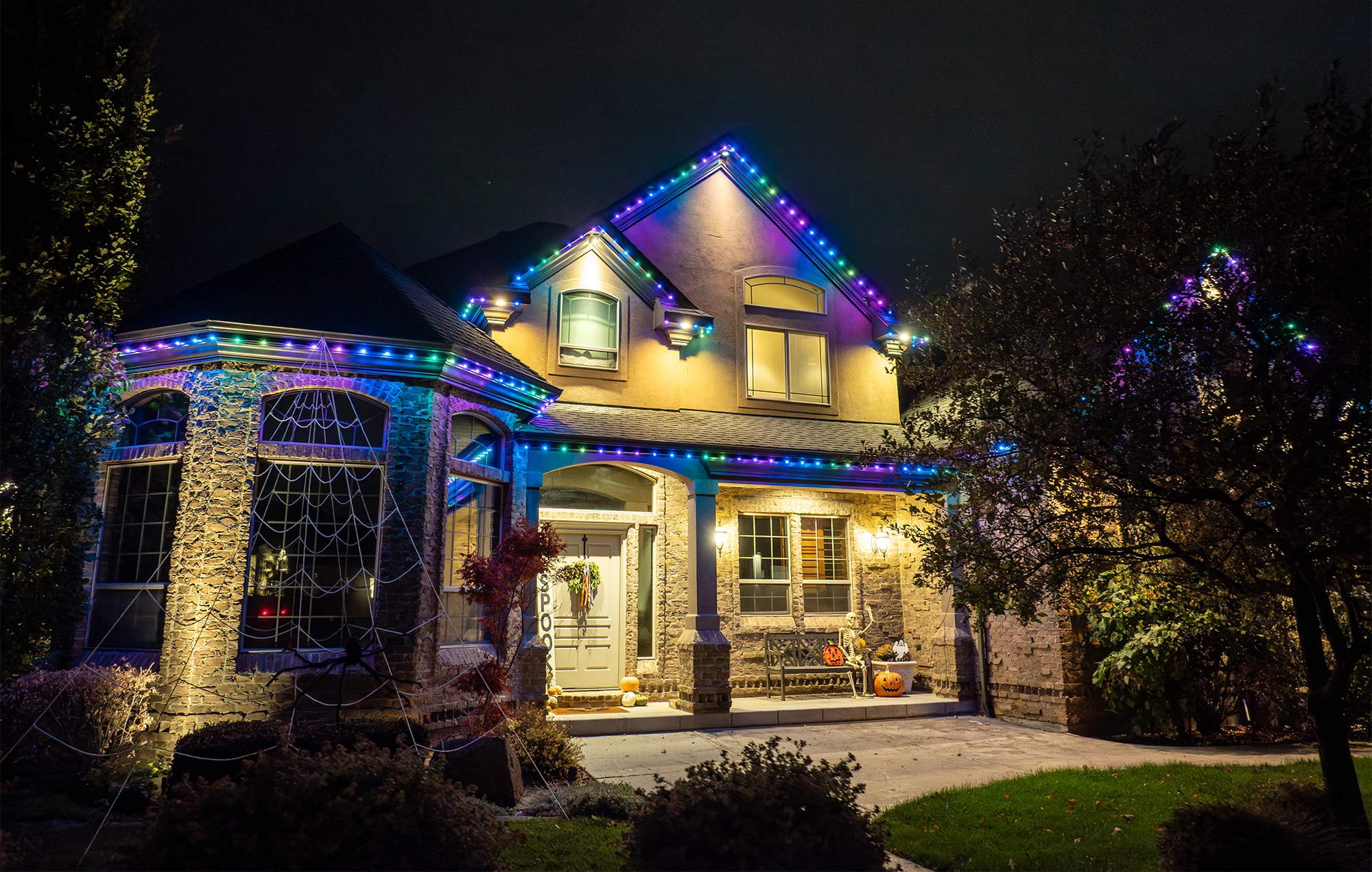
A home can look completely different after sunset without looking overdone. The right lighting brings out rooflines, trim, peaks, stonework, and entry details that disappear in the dark. This guide to residential facade lighting is built for homeowners who want that polished look year-round, plus the freedom to celebrate any occasion without dragging out tangled strands or climbing a ladder.
Start With the Architecture, Not the Color
Great facade lighting follows the lines your home already has. Before choosing colors, look at the elements that give your exterior its character: the roofline, gables, dormers, fascia, columns, front entry, and garage. Your lighting should make those features easier to see at night, not compete with them.
For many homes, a clean roofline installation delivers the biggest visual impact. Fixtures tucked beneath soffits, trim, or flashing stay discreet during the day, then create an even wash of light across the facade at night. This approach looks intentional because the source is hidden and the illumination feels built into the home.
The goal is balance. A single-story ranch may need a simple, continuous line that defines its width. A two-story home with peaks and gables can use those changes in elevation to create a stronger silhouette. Brick, stone, stucco, and siding all reflect light differently, so the best setting for one house may be too bright for another.
Decide What You Want the Lighting to Do
Residential facade lighting can serve several jobs at once, but one purpose should lead the design. If curb appeal is the priority, warm white lighting that outlines the architecture usually delivers the most timeless result. If holidays and game days are the main event, programmable RGBW lighting gives you the flexibility to shift from classic white to team colors, patriotic scenes, or playful patterns in seconds.
Security matters, too. A well-lit front elevation makes walkways, entry points, and the perimeter feel more visible. That does not mean turning the house into a stadium. Consistent, controlled light is usually more useful and more attractive than a few harsh floodlights that create glare and deep shadows.
Choose the Right Light Direction and Spacing
Facade lighting is as much about where light lands as the fixture itself. Downward-facing lights installed under an eave can softly illuminate siding, windows, and architectural details. Aiming light outward too aggressively can create bright dots on the ground and distract from the home. Spacing also determines whether the result looks smooth or choppy.
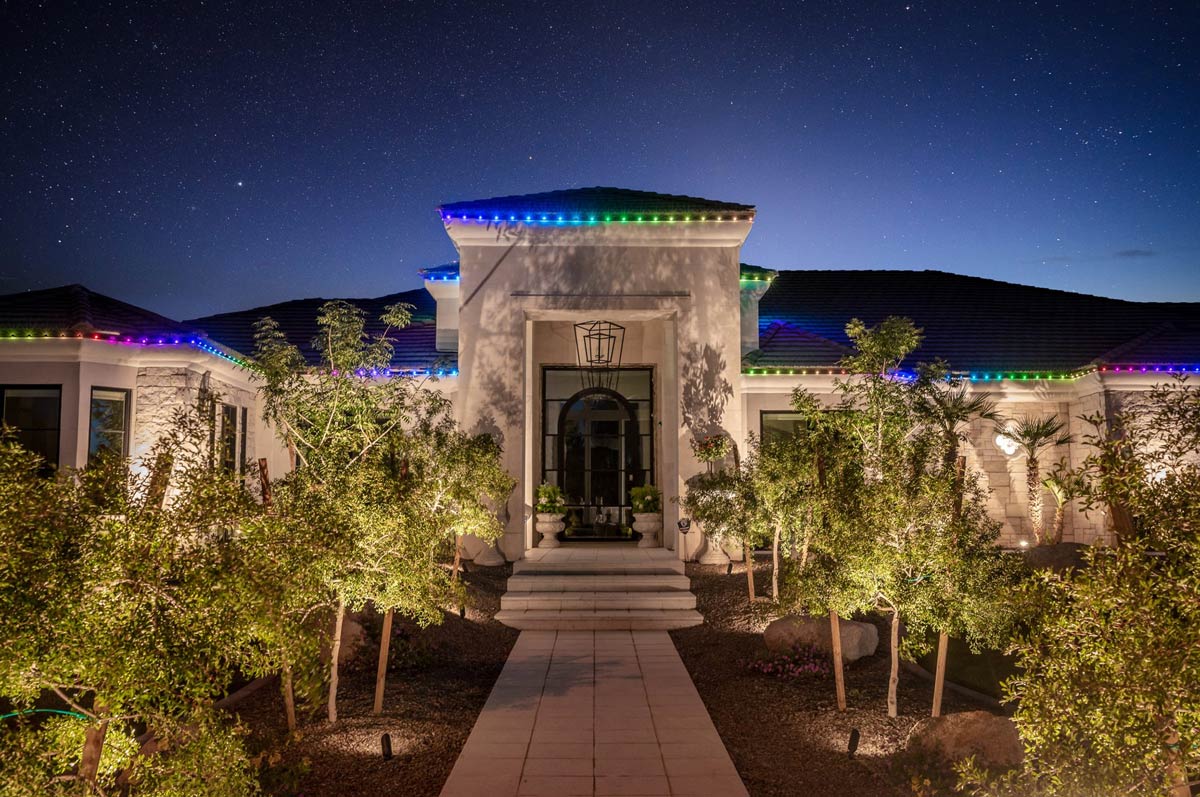
Permanent soffit lighting systems are designed to place individual lights at measured intervals, creating an even visual rhythm along the roofline. The ideal spacing depends on mounting height, soffit depth, surface color, and how pronounced you want each pool of light to appear. Taller elevations generally need more thoughtful spacing because light has farther to travel before it reaches the facade.
Test a section before committing to the full installation whenever possible. At night, stand across the street and look at the house from the sidewalk and driveway. That is where neighbors and visitors will see the finished result. If individual points look too sharp, lower the brightness or reconsider the distance from the wall. If the house feels flat, adjust placement to highlight peaks, corners, and transitions in the architecture.
Warm White Should Be Your Everyday Default
Color is the fun part, but warm white is what makes permanent lighting useful on ordinary nights. It gives the home a refined, welcoming appearance for dinners on the patio, guests arriving after dark, or simply pulling into the driveway after work.
This is where RGBW matters. Some color-changing systems mix red, green, and blue to create a version of white, but mixed white can appear cool, bluish, or uneven. A true dedicated warm-white channel produces a cleaner everyday look while still giving you a full spectrum of color when the calendar calls for it.
Think of color as an option, not an obligation. Use warm white for most evenings, then switch to orange for fall, red and green for the holidays, school colors for a graduation, or a simple red, white, and blue scene for a summer celebration. The home still looks polished because the lighting layout stays consistent even when the palette changes.
Plan for Control Before Installation
The best-looking lighting system becomes frustrating if it is hard to operate. Homeowners should be able to set a schedule, change a scene, and turn the system off without walking outside or wrestling with timers. App-based controls make it easy to run warm white automatically at dusk, schedule special scenes for a holiday weekend, and adjust brightness as the seasons change.
Automation also prevents a common mistake: leaving decorative lighting on at full intensity all night. A modest brightness setting early in the evening may be perfect for curb appeal, while a later schedule can dim the system or turn it off altogether. Your home gets its moment without wasting energy or bothering neighbors.
Look for a system with saved presets and customizable patterns rather than one that requires building every scene from scratch. EverLights, for example, combines true RGBW lighting with more than four billion color options and more than 200 preset patterns, giving homeowners plenty of creative range without adding daily work.
Think Through Power, Weather, and Installation Access
Permanent exterior lighting is a long-term home upgrade, so the planning should go beyond appearance. Map where power and controllers will be located, how wiring will be concealed, and whether each section of the roofline can be reached safely. A clean install protects the daytime look of the home just as much as it improves nighttime curb appeal.
Weather resistance is essential for US homes that face heat, snow, rain, wind, and rapid temperature changes. Choose components designed for exterior use, with durable housings and connections that can stand up to the climate where you live. Long-life LEDs also matter because replacing failed lights on a second-story roofline defeats the point of a permanent system. A 50,000-hour life expectancy can translate into years of dependable use, though actual performance still depends on installation conditions and how often the system runs.
DIY can be a smart path for homeowners who are comfortable measuring, mounting, routing low-voltage wiring, and working safely at heights. Professionally installed lighting is often the better choice for steep rooflines, complicated trim, multi-story homes, or anyone who wants a turnkey experience. It depends on your confidence, roof access, and how much time you want to spend on the project. The right choice is the one that produces a secure, straight, nearly invisible daytime installation.
Avoid the Most Common Facade Lighting Mistakes
The biggest mistake is using too much light. Brighter is not always better, especially on light-colored siding or reflective stone. Start lower than you think you need, then increase brightness only if the home disappears from the street. A controlled glow looks premium. Blinding points of light do not.
Another misstep is treating every section of the house exactly the same. A garage wing, tall gable, recessed entry, and front porch each have different proportions. Keep the lighting system cohesive, but allow the architecture to guide where visual emphasis belongs.
Finally, do not design only for December. Permanent lighting earns its value when it works in January, July, and every ordinary evening between. Choose a setup that can be understated for daily curb appeal, practical for security, and ready for celebrations with a few taps.
Make the House Feel Like Yours After Dark
The strongest residential facade lighting does more than outline a roof. It makes the home feel finished after sunset, gives every season a little more personality, and removes one more recurring task from your holiday checklist. Plan it around your architecture, keep everyday settings warm and restrained, and save the bold colors for the moments worth lighting up.