
Are roofline systems HOA approved? Often, yes – but approval depends on your community’s governing documents, architectural review process, and the way the system looks when it is not turned on. That distinction matters. A permanent roofline lighting system that sits discreetly under the soffit can be very different from seasonal strands clipped across gutters, but your HOA may still want to review the plan before installation.
For homeowners who are ready to ditch the ladders and enjoy polished lighting year-round, the goal is not to work around the HOA. It is to show the board that your project protects the clean, consistent look of the neighborhood while giving you more control over your home’s exterior.
Why HOA Approval for Roofline Systems Varies
There is no single rule for every homeowners association. Some communities have detailed architectural standards covering exterior fixtures, trim colors, wiring, and holiday décor. Others only address visible changes to the home. Your answer may also depend on whether you live in a single-family neighborhood, a townhome community, or a condominium association with more control over exterior elements.
Most HOAs are not evaluating whether smart permanent lighting is a good product category. They are evaluating whether the installation changes the appearance of the home, creates a nuisance, or conflicts with existing design standards. A carefully installed system may receive a much different response than bright, exposed cords or lighting that remains in animated holiday mode every night.
The governing documents to check are usually the declaration or CC&Rs, architectural guidelines, rules and regulations, and any application form for exterior modifications. Look for language around exterior lighting, rooflines, eaves, soffits, trim, electrical work, holiday decorations, and visible equipment. If the language is broad, ask the architectural review committee how it applies to low-profile permanent lighting before scheduling an installation.
What an HOA Usually Reviews
A good HOA wants the neighborhood to look cared for, not dark and joyless. Still, boards have legitimate questions, especially when a newer home technology is involved. They typically focus on visibility, installation quality, brightness, operating hours, and the potential effect on neighboring homes.
Daytime appearance
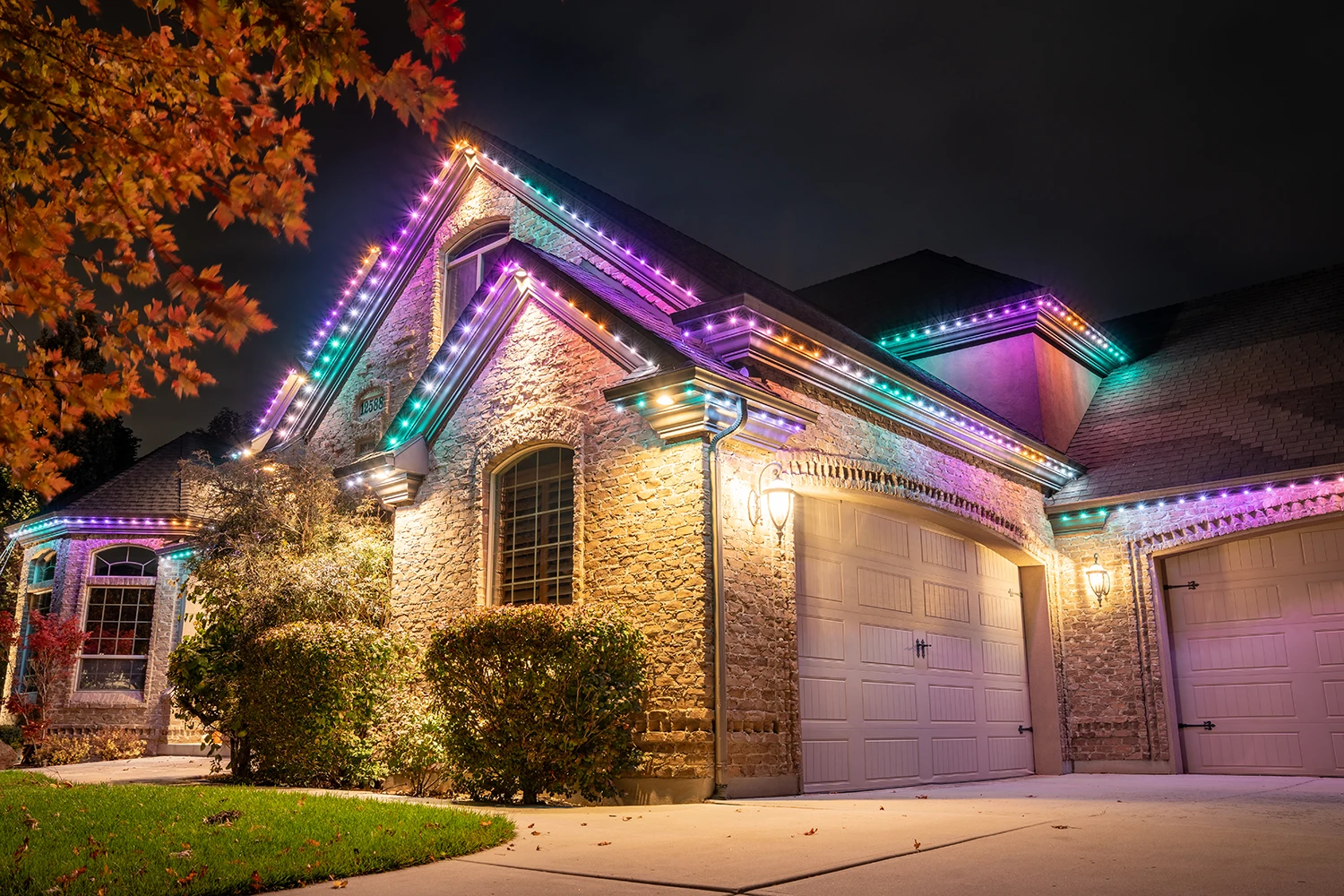
This is often the strongest point in favor of a professionally designed roofline system. Permanent lights installed beneath soffits, trim, or flashing can remain far less noticeable during daylight than traditional string lights. The housing, wire path, controller location, and color of mounting components all matter.
When you submit your request, do not simply say “permanent holiday lights.” Explain that the lights are designed to be discreetly integrated along the roofline and that the system will not leave loose strands, dangling extension cords, or temporary clips visible across the façade.
Placement and architectural impact
Boards may want to know exactly where lights will be installed. A simple diagram or photo of the front elevation is useful. Mark the roofline sections, show where the controller will sit, and note whether wiring is concealed. If your home has stone, stucco, specialty trim, or historic design requirements, expect a closer review.
Keep the request focused on the portions of the home visible from common areas or the street. A system installed under the rear patio roof may draw less scrutiny than one spanning a prominent front gable.
Brightness, colors, and animation
HOAs frequently have concerns about glare, flashing effects, and late-night displays. Those concerns do not mean you cannot have programmable lighting. They mean your plan should include reasonable operating standards.
A smart RGBW system gives homeowners a practical advantage here. You can use true warm white for everyday curb appeal, set schedules that turn lights off at a chosen hour, and reserve animated patterns for holidays, game days, or celebrations. That control makes it easier to be a good neighbor without giving up the fun.
Safety and installation standards
Some associations ask whether the system is low voltage, weather rated, professionally installed, or compliant with local electrical requirements. Others may require a licensed electrician for certain connections. Your city or county may also have permit rules that are separate from HOA approval.
Permanent lighting should be installed according to the manufacturer’s instructions and applicable local codes. If you choose a DIY route, be ready to explain the components and installation method. If you choose professional installation, include the installer’s information if the application asks for it.
 How to Get a Roofline Lighting System Approved
The easiest path is to make the review simple. HOA boards are often made up of volunteers with limited time. A complete, thoughtful request reduces back-and-forth and signals that you are treating the project as a long-term home improvement, not a temporary display.
Start by reading the application instructions. Some associations require approval before any work begins, and installing first can lead to fines or an order to remove the system. Even if neighbors already have exterior lighting, do not assume their approval sets a binding precedent for your home.
Your request should clearly describe the proposed system, its location, and its day-to-day use. Include product photos or a specification sheet if available, plus a photo of your home with the proposed roofline sections marked. Mention that the installation will be low profile, wiring will be managed neatly, and the system will be controlled by scheduling.
It also helps to state how you will operate the lights. For example, you may use warm white or subtle architectural colors most evenings, turn lights off by 10 or 11 p.m., and use special patterns only for limited holiday periods. That is not a promise to make your home boring. It is proof that you understand the difference between a memorable display and a neighborhood nuisance.
If you are working with a permanent lighting provider such as EverLights, ask for installation photos that show the product during the day and at night. Before-and-after visuals can help a board understand the low-profile design much faster than a paragraph of technical terms.
A Simple Way to Frame Your HOA Request
The wording of your application can shape the conversation. Avoid framing the system only as “holiday lights,” which may lead a reviewer to picture seasonal strands and flashing bulbs. Instead, describe it as a permanent, app-controlled exterior lighting system installed discreetly beneath the roofline.
You can explain that it will provide warm-white architectural lighting for everyday curb appeal, with programmable color options for holidays and family events. Note that the system can be scheduled, dimmed, and turned off remotely. If your HOA has quiet-hour rules or exterior-lighting limits, state that you will follow them.
A concise request might read like this:
“Homeowner requests approval to install a low-profile, permanent exterior LED lighting system beneath the front roofline soffits. Components and wiring will be installed neatly and designed to remain discreet during daylight. Lighting will be app controlled, scheduled, and operated in compliance with community rules regarding brightness, hours, and nuisance lighting.”
Customize that language to your association’s forms and standards. Do not claim the system is invisible if it is not. Accuracy builds trust, especially if the committee asks for photos or a site visit.
Common Reasons an HOA May Say No
A denial is not always final, but it is useful to understand why it happens. The most common issue is a rule that prohibits permanent fixtures along the roofline or requires a specific type of exterior light. A board may also object to exposed wire, controller boxes in a visible location, highly animated effects, or color use outside designated holiday windows.
Sometimes the problem is the application, not the project. A vague request with no photos, no product information, and no placement diagram gives the committee little reason to approve. Resubmit with better documentation and a clearer operating plan if the rules allow it.
If the guideline itself is outdated, homeowners can respectfully ask the board whether it will consider a policy for modern permanent lighting. A reasonable policy might permit low-profile systems while setting limits on brightness, timing, flashing, and visible installation materials. That approach protects neighborhood standards without forcing every homeowner back onto a ladder each December.
Be a Good Neighbor After Approval
Approval is the beginning of the relationship, not the end of it. Set your schedule thoughtfully, especially if your home faces another residence. Keep bright colors and motion effects for appropriate occasions, lower the intensity when needed, and respond graciously if a neighbor raises a concern.
Permanent roofline lighting should make your home feel more finished, more festive, and more secure – not create a nightly light show for everyone else on the block. With a discreet installation and smart controls, you can light it up for the moments that matter while keeping the peace the rest of the year.
Before you choose colors for the first holiday, get the written approval, save your documentation, and set a schedule your neighbors can live with. That small bit of planning can turn a potential HOA headache into the last year you hang Christmas lights.
l hassle.