
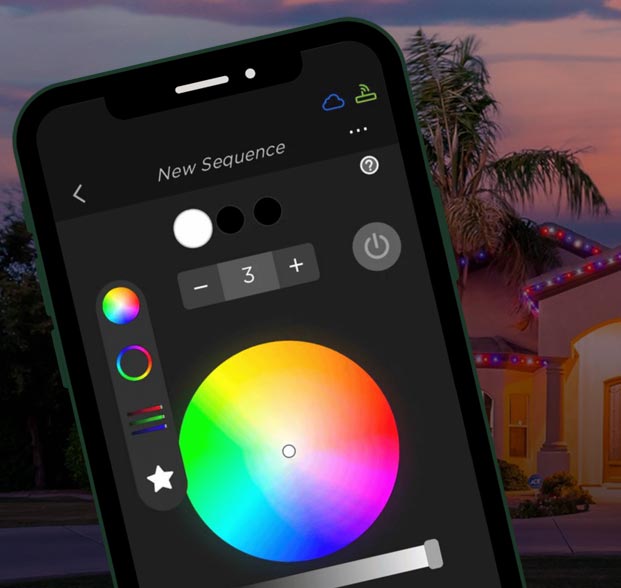
A smart outdoor lighting system replaces that annual routine with permanent, programmable lighting that is ready whenever your home has something to celebrate. Set it once, then switch from warm white curb appeal to holiday color, game-day colors, or a security-focused schedule from your phone.
That convenience matters, but it is not the whole story. The right permanent lighting system should look polished in daylight, perform reliably in rough weather, and give you useful control without turning your home into a complicated tech project.
What a Smart Outdoor Lighting System Does
A smart outdoor lighting system uses permanently installed exterior lights, a controller, and a mobile app to give you control over color, brightness, patterns, and schedules. Rather than clipping temporary strands to gutters every December, the lights are installed beneath soffits, trim, or flashing, where they stay discreet during the day and make an impact after dark.
For most homeowners, the appeal is simple: your house can look finished every night of the year without a seasonal setup ritual. Warm white can highlight rooflines and architectural details on an ordinary Tuesday. Red, white, and blue can mark a summer holiday. School colors can celebrate graduation, while team colors can carry a game-day tradition right to the curb.
Smart control makes the system more useful than a basic timer. You can schedule lights to turn on at sunset, select a preset pattern for an event, or make a quick change from the driveway when plans shift. Many systems offer hundreds of prebuilt effects and billions of color combinations, so you do not need design skills to create a look that fits the occasion.
Why Permanent Lighting Changes the Equation
Temporary holiday lights solve one problem for a few weeks. Permanent lighting gives your exterior a year-round layer of flexibility. It is a home upgrade for people who care about curb appeal but do not want another item on the weekend to-do list.
A clean look, even when the lights are off
The best permanent systems are designed to disappear into the roofline during daylight hours. Placement and track color matter here. A system that is highly visible by day can make a home look unfinished, no matter how impressive it looks at night.
This is also why installation planning should happen before you choose colors and patterns. A thoughtful layout follows your home’s architecture, keeps spacing consistent, and puts light where it will enhance the facade rather than create distracting hot spots.
 Color when you want it, warm white when you do not
Not all color lighting is created equal. RGB lights create colors by blending red, green, and blue, but a dedicated white channel makes a real difference for everyday use. RGBW lighting gives you vibrant event colors along with a more natural warm-white option for nightly accent lighting.
That trade-off is easy to miss when comparing prices. If your goal is only occasional color, a basic RGB setup may be enough. If you want lighting that feels at home on your house in every season, true warm white is worth prioritizing.
A practical layer of security
Exterior lighting can make entries, walkways, and the home’s perimeter easier to see after dark. Scheduled illumination also helps the property look occupied when you are away. It should support – not replace – locks, cameras, and good outdoor visibility, but it is a simple way to light it up for security without leaving every fixture blazing all night.
Features That Matter Before You Buy
A permanent lighting purchase should be judged by more than the app screenshots. Start with durability. Your lights will face sun, heat, rain, snow, wind, and changing temperatures, so weather-resistant construction and protected connections are essential. Look for a stated life expectancy as well. A 50,000-hour rating signals a system built for long-term use, though real-world performance still depends on installation quality and operating conditions.
Brightness is another area where more is not always better. Lights around 70 lumens can create a vivid roofline effect without washing out the home. The best brightness depends on your neighborhood, the height of the roofline, surrounding streetlights, and whether you want subtle architectural lighting or a bolder display. Adjustable brightness gives you room to keep things tasteful on regular nights and turn things up for celebrations.
The controller and app deserve a close look, too. You should be able to create schedules, choose zones, adjust colors, and save favorite scenes without needing to stand outside in bad weather. Preset patterns are helpful when you want a polished display fast. Custom control is more valuable when you enjoy creating specific looks for family traditions, teams, or business promotions.
Finally, ask about support and warranty coverage before installation begins. Permanent lighting is intended to stay in place. Clear product support, accessible replacement parts, and warranty terms that match the investment can make the difference between a system you enjoy for years and one that becomes a headache after its first season.
Choosing a Smart Outdoor Lighting System for Your Home
Start by looking up at your roofline. Single-story ranch homes, multi-level homes, homes with dormers, and properties with covered patios all call for different planning. Decide whether you want to outline only the front elevation or include sides, peaks, patios, pergolas, and outdoor living areas. The right answer depends on visibility, budget, and how much of the home you want to feature.
Then think through how you will use the lights in February, not just in December. If your list includes warm white every evening, holiday scenes, birthdays, sports, and occasional security lighting, a full-featured RGBW system is likely a better fit than a simple seasonal display. If you only want to highlight a small patio or entry, a smaller layout may deliver more value than extending lights around areas no one sees.
Homeowners also need to choose between DIY installation and professional installation. A quality DIY kit can be a smart path for someone comfortable measuring runs, managing power, working safely at height, and following detailed installation instructions. It offers more hands-on control and can reduce upfront installation costs.
Professional installation is often the better choice for steep rooflines, complex trim, large homes, or anyone who wants zero fuss. A trained installer can recommend placement, conceal wiring, handle mounting details, and set up the system so it looks intentional from day one. EverLights offers both professionally installed systems and DIY-configurable ClickLights options, giving homeowners room to choose the approach that fits their property and comfort level.
Make It Part of Your Routine, Not Another App
The easiest way to get lasting value from permanent lighting is to create a few dependable scenes. Set a warm-white schedule for normal evenings, save a lower-brightness late-night setting, and keep a handful of holiday and celebration presets ready to go. Once those basics are in place, the app becomes a convenience rather than another thing to manage.
Be considerate of neighbors, especially with animated patterns. Bold effects are great for a party, a holiday weekend, or a big win. On an ordinary night, a quiet warm-white outline usually delivers the strongest curb appeal. Good lighting should make your home stand out, not make the block feel like it is under stadium lights.
A smart outdoor lighting system earns its place when it removes work while giving your home more ways to feel welcoming. Plan for the view you want on an average evening, choose a system built to handle every season, and let the holiday magic be the bonus instead of the only reason to install it.
n.