
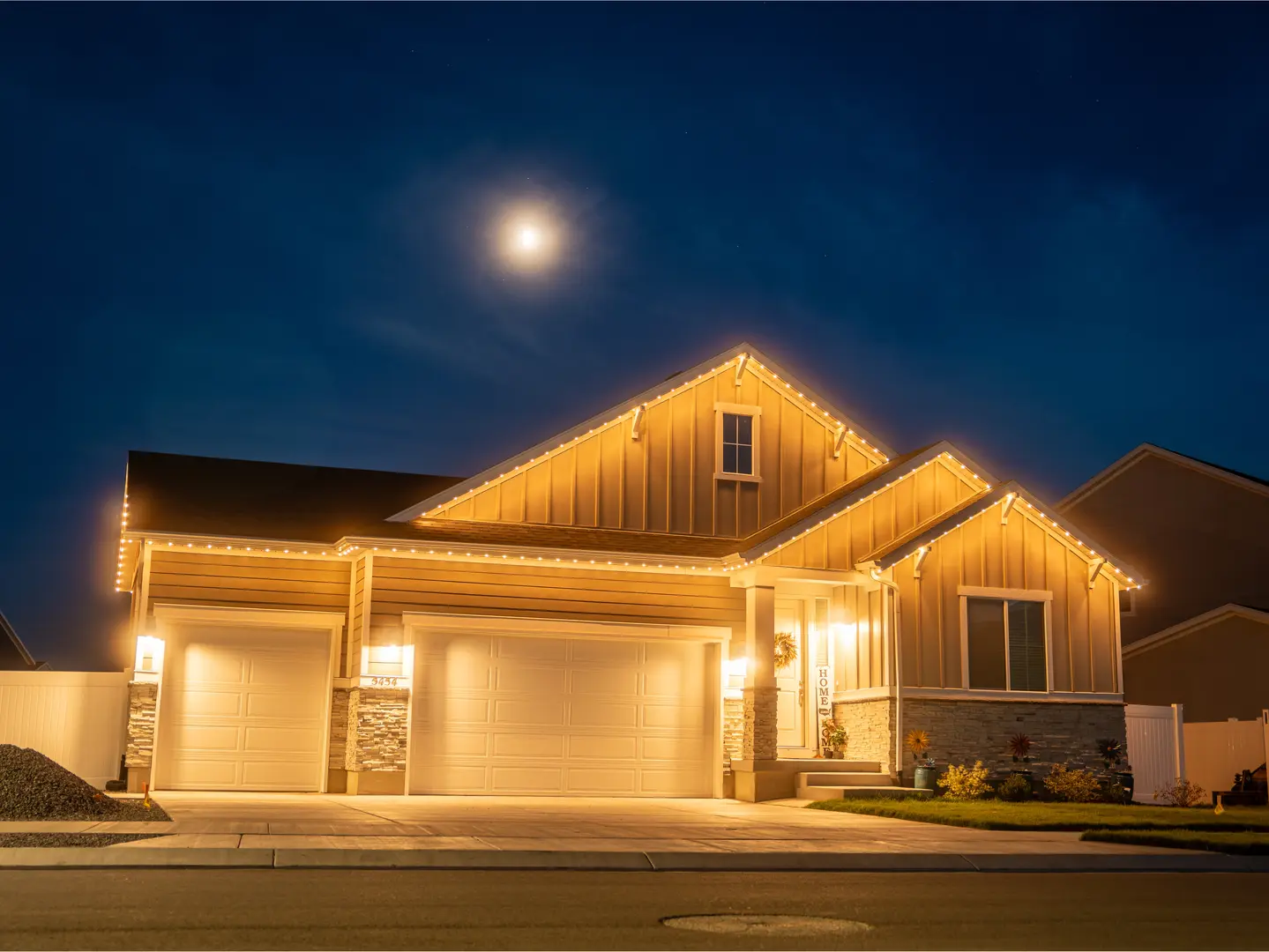
A dark side yard, an unlit driveway, and a front entry that disappears after sunset can make even a well-kept home feel less protected. Permanent lights for security give you a practical way to keep the outside of your home visible, welcoming, and harder to approach unnoticed – without dragging out temporary fixtures or turning on a harsh floodlight every night.
The best security lighting does more than blast brightness across the lawn. It helps your home look occupied, makes paths and entrances easier to see, and gives cameras a better chance to capture usable footage. With permanent smart lighting, you can build that visibility into your home’s exterior and control it from your phone.
Why Exterior Lighting Supports Home Security
Most people do not want their house to look like a parking lot after dark. They want a polished home that still feels comfortable for family, guests, and neighbors. Permanent exterior lighting gives you more control than a single motion light because it can create a consistent baseline of illumination where your property needs it most.
A softly lit roofline, garage, front porch, and side access point can remove the deep shadows that make it easier for someone to move around unseen. It also makes routine moments better: coming home late, taking out the trash, walking the dog, or welcoming guests after sunset.
Security lighting can be a deterrent, but it is not a replacement for locked doors, working windows, alarms, cameras, or good habits. Think of it as one useful layer in a wider home-security plan. The goal is not to make a promise that lighting can prevent every problem. The goal is to make your property easier to see, easier to navigate, and less inviting to someone looking for cover.
What Permanent Lights for Security Can Do
Create a lived-in look on a schedule
A completely dark home can signal that no one is around. Smart permanent lighting lets you schedule a warm white scene to come on at dusk and turn off at a reasonable hour, even when you are away for the weekend or traveling.
That consistency matters. Instead of relying on someone to remember porch lights every evening, your home follows a routine. You can also vary schedules by day, use a later shutoff on weekends, or keep a lower-level architectural look active overnight if your property layout calls for it.
Improve visibility around key access points
Front doors, garages, gates, walkways, side doors, and backyard entries deserve extra attention. These are the places where family members need reliable visibility and where visitors naturally approach.
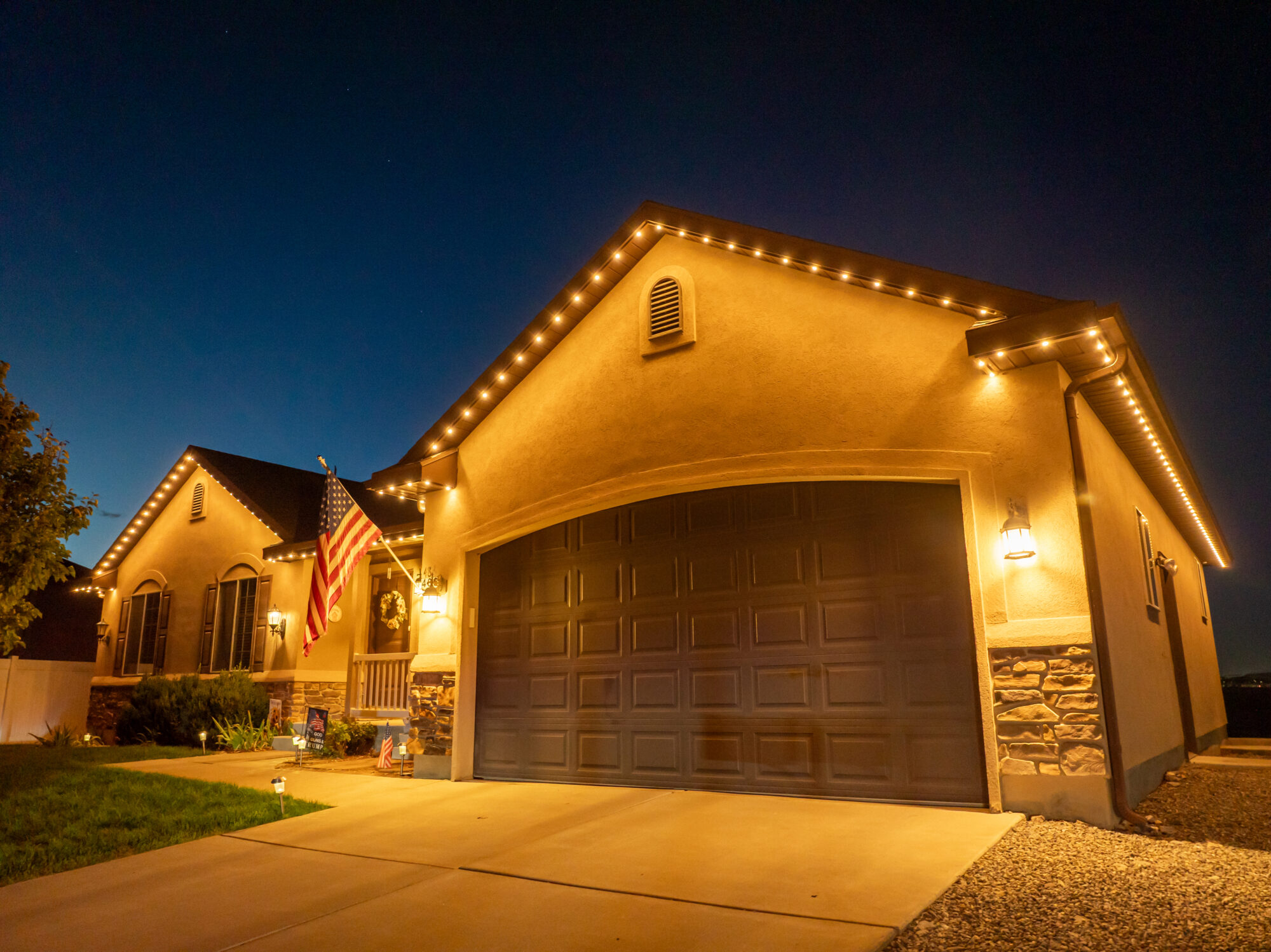
Permanent lights mounted discreetly under soffits, trim, or flashing can cast light down the exterior without putting exposed cords and temporary clips around the home. A well-planned layout helps define the structure of the house while reducing the heavy shadows around entrances.
 Support cameras without relying on glare
Cameras generally perform better when the scene has even, usable light. A powerful floodlight can create glare, wash out nearby details, or leave the background too dark. Permanent lighting can provide a more balanced foundation, especially around a driveway, entry, or walkway.
Placement is the deciding factor. Light should reach the area your camera needs to see without shining directly into the lens. Test your camera view after dark, then adjust lighting scenes and brightness until faces, vehicles, and movement are easier to distinguish.
Make sudden activity more noticeable
A home with a consistent lighting pattern makes changes stand out. If a motion-activated device, camera alert, or separate sensor turns on a brighter zone near an entry, the shift is easier to notice than it would be at an already pitch-black home.
Permanent lights do not need to be the motion sensor themselves to be useful in this setup. They can provide the everyday lighting layer, while dedicated motion lights and cameras handle immediate alerts where needed.
Build a Security Lighting Plan Before You Choose Colors
Start by walking your property after dark. Stand at the curb, pull into the driveway, walk from the sidewalk to the front door, and look at the side and rear access areas. You will quickly see where shadows collect and which parts of the home disappear at night.
For most homes, a good plan starts with the front elevation and then expands to the areas that are actually used. A long, dark side yard may matter more than a decorative lighting effect on the second story. If you have a detached garage, gate, pool area, or backyard entertaining space, consider how each zone is used after sunset.
Focus on four questions:
- Can you clearly see the route from the driveway or street to the front door?
- Are side doors, gates, and garage access points visible without creating glare?
- Does your camera footage remain clear once the lights are on?
- Can you leave the everyday scene on for hours without bothering bedrooms or neighbors?
The answer may be different for every property. A compact suburban home may need a warm white roofline and front entry scene. A larger corner lot may benefit from additional lighting at the garage side or along a gated path. More lights are not automatically better. Thoughtful coverage is better.
Choose Warm White for Everyday Security
Color is one of the biggest reasons homeowners choose permanent lighting, but everyday security scenes usually look best in warm white. True warm white lighting feels intentional and classic, making the house look cared for instead of overly dramatic.
RGBW systems give you the flexibility to switch from that useful nightly white to team colors, holiday patterns, event lighting, or a bold weekend scene whenever you want. That flexibility is the point: your security setup does not have to make the home look industrial 365 days a year.
Keep special effects for celebrations. Fast-moving patterns, flashing colors, and very bright saturated hues can be fun for a game day or holiday, but they are not ideal for an overnight security scene. They can distract drivers, annoy neighbors, and make it harder for cameras to adjust consistently. Save the show for when you are home and enjoying it.
Brightness and Placement Matter More Than Maximum Output
The right brightness depends on the height of your roofline, the color of your siding, nearby streetlights, landscaping, and the distance between your home and the street. A pale exterior may need less output than dark brick or deep landscaping. A home with several existing streetlights may need a subtle accent, while a rural property may need more intentional coverage.
Avoid aiming for a harsh, bright-white wash over every surface. It can create uncomfortable glare, throw light into neighboring windows, and make your home look less inviting. A layered approach works better: use permanent lighting for broad architectural visibility, then add purpose-built lighting where a path, door lock, stair, or camera zone needs focused illumination.
Before finalizing a scene, view it from inside your home, from the sidewalk, and through your cameras. If the porch is bright but the person standing at the bottom of the steps is still hard to see, the layout needs adjustment. If the lights overpower the façade, bring the brightness down. Smart control makes these refinements much easier than reinstalling temporary lights each season.
DIY or Professional Installation?
The right installation path comes down to your comfort level, roofline complexity, and how polished you want the finished look to be. A DIY homeowner can install professional-grade permanent lighting with careful measuring, secure mounting, and a plan for power and control placement. This route can be a great fit for straightforward rooflines and homeowners who enjoy hands-on projects.
Professional installation is often worth considering for multi-story homes, complex peaks, difficult access, long runs, or commercial properties. A trained installer can help map the lighting, conceal components, and create a finished result that looks intentional during the day as well as at night.
EverLights offers both paths, from ClickLights DIY options for capable homeowners to professional installation for those ready to ditch the ladders and let a team handle the details. Either way, choose a system designed for outdoor exposure, long-term use, and app-based scheduling rather than a temporary solution you will replace next season.
Set It Once, Then Adjust as Life Changes
Your first security scene does not have to be perfect. Start with a warm white schedule at dusk, use a moderate brightness level, and live with it for a week. Check how it looks during rain, from the street, and through your cameras. Then make small adjustments to timing, brightness, and zones.
That is the real advantage of permanent smart lighting: your exterior can keep up with the way you live. Light it up for security on ordinary weeknights, switch to festive colors when the family comes over, and return to a calm, polished warm white scene when the celebration ends. A home that looks cared for after dark does more than stand out – it gives you one less thing to worry about when the sun goes down.